

Google’s new ad asks what the Founding Fathers could have done with Google Workspace, dropping Jefferson and Franklin into Docs, Meet, Calendar, and Gemini. Timed to the 250th anniversary of independence, it’s playful and light on the AI hard-sell. Reactions split sharply between platforms.
Key Takeaways
- Google’s ad reimagines 1776 with Workspace and Gemini tools
- The tagline is “Group project, but make it 1776”
- AI shows up lightly: visualizing a seal, taking meeting notes
- The ad avoids claiming AI would improve the actual text
- Reception was warm on YouTube and Instagram, harsh on Bluesky
What the Ad Shows
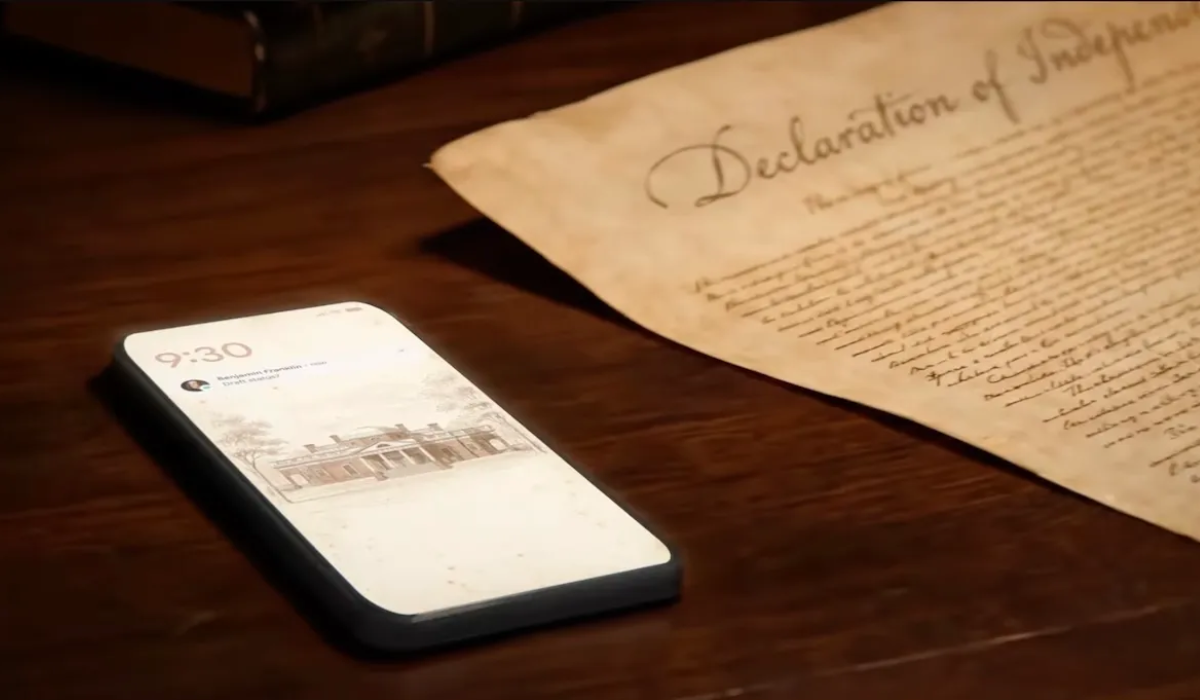
The premise is a what-if. Two hundred and fifty years after the signing, Google’s spot asks what the Founding Fathers could have done with Google Workspace, running under the tagline “Group project, but make it 1776.”
The setup is a running gag about remote collaboration. A largely unseen Thomas Jefferson is mid-draft when a nagging text arrives from Ben Franklin, and the whole founding process slides into the Google ecosystem from there.
Every step maps to a product. Edits get suggested in Google Docs, a meeting is booked in Google Calendar and held over Google Meet (with every attendee somehow on camera-off), and the document is finalized with e-signatures before the fireworks land.
The tone stays light throughout. At one point Sam Adams asks whether the group can just settle things over beers, keeping the spot firmly tongue-in-cheek rather than earnest.
Where the AI Actually Appears
For a 2026 tech ad, the AI is surprisingly restrained. Gemini shows up in small, specific ways rather than as the star of the show.
The founders use Google’s “help me visualize” tool to try different animals on the national seal, Gemini takes notes during the meeting, and the group even asks the chatbot for advice before declining King George III’s document access request.
What it pointedly avoids is telling. Unlike some past efforts, the ad shies away from any suggestion that the actual text of the Declaration would be improved by AI. The sacred words stay human.
That restraint may be deliberate. Compared with the heavy AI evangelism in many recent commercials, this one keeps the technology in a supporting role, closer to office software than to a ghostwriter.
The most AI-forward part might be the footage itself. Several observers noted the imagery carries the uncanny sheen often associated with AI-generated video, though Google hasn’t confirmed how the spot was produced.
A Divided Reception
The response broke cleanly along platform lines. On YouTube and Instagram, viewer comments ran mostly positive, taking the ad in the light, humorous spirit it aimed for.
Bluesky was another story. Posters there called the commercial cringey and stunningly tone deaf, with the AI angle drawing the sharpest fire.
The irony wasn’t lost on critics. Even as they piled on, many pointed out how little of the ad actually leans on AI, a gap between the marketing framing and what’s on screen.
Historian Angus Johnston captured the core objection. He argued that even in a corny fantasy joke, it’s impossible to make the case that AI is a useful tool for political organizing, writing, or human collaboration. For a document born of debate and moral reckoning, that critique cuts at the premise itself.
Google’s Tricky History With AI Ads
This isn’t Google’s first walk along this particular tightrope. The company has repeatedly tested how much AI its audience will accept in emotional or creative moments, with mixed results.
The obvious reference point is the 2024 “Dear Sydney” spot, in which a father used Gemini to help his daughter write a fan letter to an Olympic athlete. After fierce backlash during the Paris Olympics, Google pulled it from the broadcast rotation, saying that while it had tested well, the feedback warranted phasing it out.
That episode explains the caution here. By keeping AI in a minor role and leaving the Declaration’s words untouched, Google seems to have learned from the criticism that greeted a machine drafting something personal.
The bigger picture is an industry-wide push. Google Workspace, Microsoft 365, and rivals have all folded AI assistants into everyday tools that draft messages, summarize meetings, and generate images. The Declaration spot is essentially a high-budget metaphor for that shift.
Whether it resonates depends on the viewer. The split reception is a reminder that public feeling about AI in creative and collaborative work remains deeply divided, and that even a lighthearted holiday ad can land very differently depending on who’s watching.
Digital Trendings is your trusted source for AI news and updates, stay tuned for more.