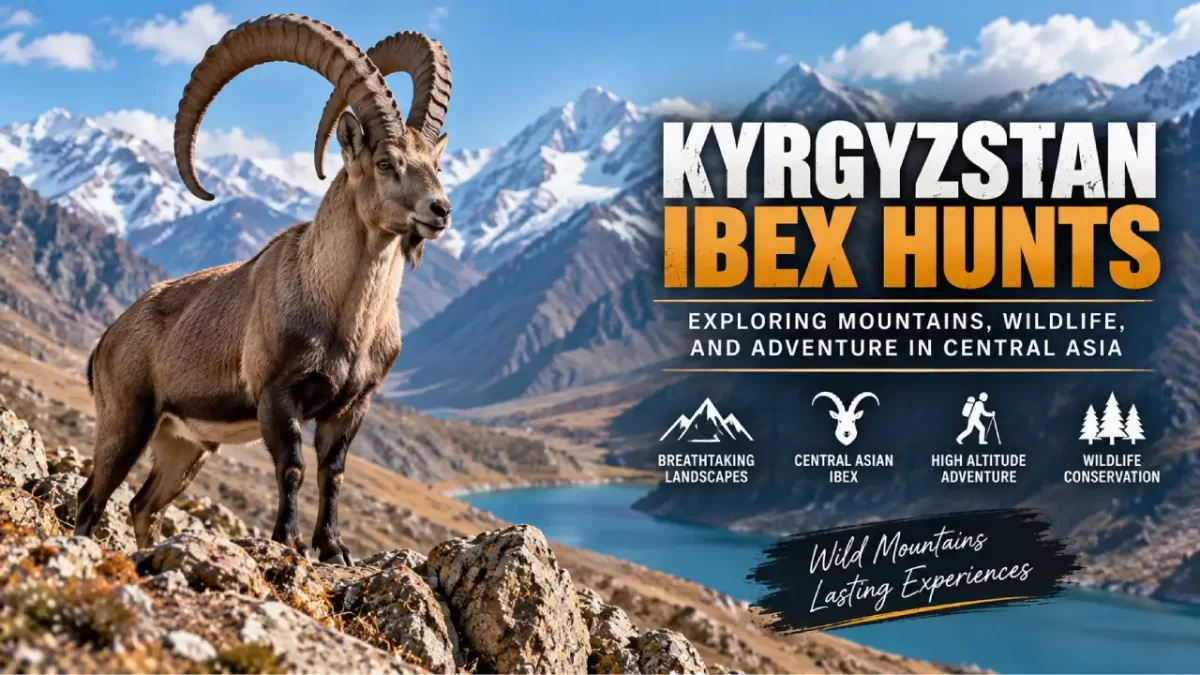


Kyrgyzstan ibex hunts are closely associated with one of Central Asia’s most dramatic landscapes: the towering Tian Shan mountain system. Kyrgyzstan is dominated by rugged mountains, high valleys, alpine terrain, and remote wilderness that supports the Central Asian ibex.
For travelers and wildlife enthusiasts, the appeal of this region extends well beyond a single outdoor activity. The combination of high elevation, isolated valleys, changing weather, traditional mountain culture, and remarkable wildlife makes Kyrgyzstan a distinctive destination.
Anyone researching Central Asian ibex hunting, mountain hunting in Kyrgyzstan, or the Tian Shan ibex should first understand the species, its habitat, and the physical realities of spending time in a high-altitude environment.
Book Your Kyrgyzstan Ibex Hunts Adventure 307-637-5495 |
  info@hunt-nation.com
Why Kyrgyzstan Is Known for Ibex
Kyrgyzstan is a landlocked Central Asian country where mountains shape much of the landscape.
The Tian Shan range extends across a large portion of the country, creating extensive habitat for mountain wildlife. Elevations vary dramatically, from valleys and foothills to alpine environments far above the tree line.
The Central Asian ibex is particularly well adapted to these rugged environments.
Ibex can occupy steep slopes, rocky ridges, cliffs, alpine meadows, and other mountainous terrain. Their physical characteristics allow them to move confidently through landscapes that would be difficult for people and many other animals to navigate.
This close relationship between species and landscape is one reason Kyrgyzstan ibex have become so strongly associated with the country’s wilderness.
Understanding the Central Asian Ibex
The Central Asian ibex is a wild goat found across mountainous regions of Central Asia.
Mature males are especially recognizable because of their large, curved horns. Females also have horns, although they are generally smaller.
Their strong legs and specialized hooves help them move across steep, rocky terrain.
These adaptations are essential.
Mountain environments contain loose rock, cliffs, narrow slopes, snow, and rapidly changing weather. An animal living permanently in such conditions needs exceptional balance and mobility.
The Tian Shan ibex demonstrates how wildlife can become highly specialized for demanding environments.
The Importance of Mountain Habitat
Healthy ibex habitat depends on more than elevation.
Animals require suitable feeding areas, escape terrain, seasonal ranges, water, and enough connected habitat to move as environmental conditions change.
Alpine meadows and mountain vegetation can provide important food resources during warmer months.
As seasons change, snow depth and food availability may influence where animals spend their time.
Human land use can also affect mountain wildlife.
Livestock grazing, roads, development, mining, tourism, and other activities may interact with wildlife habitat differently depending on location.
Understanding these relationships is an important part of long-term mountain wildlife conservation.
High Altitude Defines the Experience
One of the defining characteristics of mountain hunting in Kyrgyzstan is simply the elevation of the landscape.
High-altitude environments place additional demands on the human body because less oxygen is available as elevation increases.
Even physically active visitors may notice that normal activities feel more demanding at altitude.
This makes acclimatization important for anyone traveling into high mountain environments.
Visitors should approach altitude conservatively, allow their bodies time to adjust, stay attentive to how they feel, and seek appropriate professional medical guidance when planning travel to very high elevations.
Physical fitness alone does not guarantee that someone will adapt quickly to altitude.
Weather in the Tian Shan Mountains
Mountain weather can change rapidly.
A day that begins with relatively mild conditions may later bring strong wind, colder temperatures, rain, or snow depending on elevation and season.
Temperature differences between daytime and nighttime can also be substantial.
This variability makes careful travel planning essential.
Anyone visiting remote parts of the Tian Shan Mountains should research expected local conditions rather than relying on general weather information for Kyrgyzstan as a whole.
Mountain valleys and high ridges can experience very different conditions at the same time.
Seasonal Changes in Ibex Behavior
Like many mountain species, Central Asian ibex adjust their behavior as seasons change.
During warmer periods, animals may use high alpine areas where vegetation is available. As winter conditions develop, snow and food availability can influence movement.
Breeding behavior creates another seasonal change.
During the rut, mature males interact more frequently as breeding becomes a priority. Outside the breeding period, males and females may show different social patterns.
These seasonal changes help explain why wildlife researchers study populations throughout the year rather than relying on observations from a single period.
Remote Travel in Kyrgyzstan
Much of the appeal of Kyrgyzstan comes from its remote character.
Reaching high mountain areas may involve traveling considerable distances from major towns and cities.
Road conditions can change as travelers move into rural and mountainous areas. Some remote destinations may involve additional forms of local transportation.
Horses have historically played an important role in travel across Central Asian mountain landscapes, and equestrian traditions remain strongly associated with Kyrgyz culture.
For visitors, the key point is that remote mountain travel requires considerably more planning than visiting an easily accessible outdoor destination.
Communication, weather, transportation, accommodation, and emergency planning all deserve consideration.
Physical Preparation for Mountain Travel
High-altitude wilderness travel can be physically demanding.
Steep terrain, uneven ground, cold weather, and elevation can combine to make relatively ordinary movement more challenging.
General preparation should focus on being comfortable with sustained outdoor activity and understanding personal limitations.
However, preparation should not be treated as a guarantee against altitude-related problems.
Altitude affects individuals differently, including people who are otherwise physically fit.
Travelers with questions about their health or ability to visit high elevations should seek appropriate medical advice before traveling.
Wildlife Management and Conservation
Responsible management of Central Asian ibex populations requires reliable information.
Wildlife professionals and conservation organizations may consider population trends, habitat conditions, reproduction, mortality, land use, and other environmental pressures when evaluating mountain wildlife.
Remote terrain can make monitoring challenging.
Unlike wildlife populations living close to roads and developed areas, mountain animals may occupy enormous areas that are difficult to access.
This makes long-term research particularly valuable.
Good management depends on understanding local conditions rather than making assumptions based on the species across its entire geographic range.
Respecting Local Regulations
Anyone researching Kyrgyzstan ibex hunts or other regulated wildlife activities must understand that international travel introduces additional legal responsibilities.
Wildlife laws, permits, protected-species rules, transportation requirements, and international regulations can change.
Travelers should rely on current government and relevant wildlife-authority information rather than assuming that information from an older travel article remains accurate.
International visitors should also research visa, customs, and documentation requirements relevant to their trip.
Regulations in another country should never be assumed to work the same way as regulations in the United States.
Kyrgyz Culture and the Mountain Landscape
A visit to Kyrgyzstan is also an opportunity to experience a distinctive Central Asian culture.
The country’s history is closely connected with horses, pastoral traditions, mountain communities, and nomadic heritage.
Book Your Kyrgyzstan Ibex Hunts Adventure 307-637-5495 | info@hunt-nation.com
For international visitors, respecting local customs and communities is an important part of responsible travel.
Learning about the destination before arrival creates a richer understanding of why these mountains matter to the people who live there as well as to the wildlife occupying them.
Frequently Asked Questions
Where do Central Asian ibex live?
Central Asian ibex inhabit mountainous areas across parts of Central Asia. In Kyrgyzstan, they are strongly associated with rugged mountain environments, including areas of the Tian Shan.
Is traveling in Kyrgyzstan’s mountains physically demanding?
It can be. High elevation, steep terrain, uneven ground, remote locations, and rapidly changing weather can make mountain travel challenging. Individual conditions vary significantly by destination.
What should international visitors research before traveling?
Travelers should verify current entry requirements, local regulations, weather conditions, transportation arrangements, wildlife rules, and appropriate health guidance using authoritative sources before departure.
Conclusion
Kyrgyzstan ibex hunts are associated with a landscape unlike most conventional outdoor destinations.
The Tian Shan Mountains, high-altitude valleys, rocky ridges, remote wilderness, and Central Asian ibex create an environment shaped by both natural history and centuries of human culture.
Understanding the destination requires more than focusing on one activity.
Ibex biology, mountain habitat, altitude, weather, seasonal movement, wildlife management, local regulations, and Kyrgyz culture all contribute to the experience of this remarkable region.
Anyone researching Central Asian ibex hunting, Tian Shan ibex, or mountain hunting in Kyrgyzstan should approach the subject with an appreciation for both the animal and the environment supporting it.
The mountains ultimately define Kyrgyzstan’s character, and responsible travel begins with understanding their scale, respecting their challenges, and recognizing the importance of conserving the wildlife and landscapes that make Central Asia unique.


