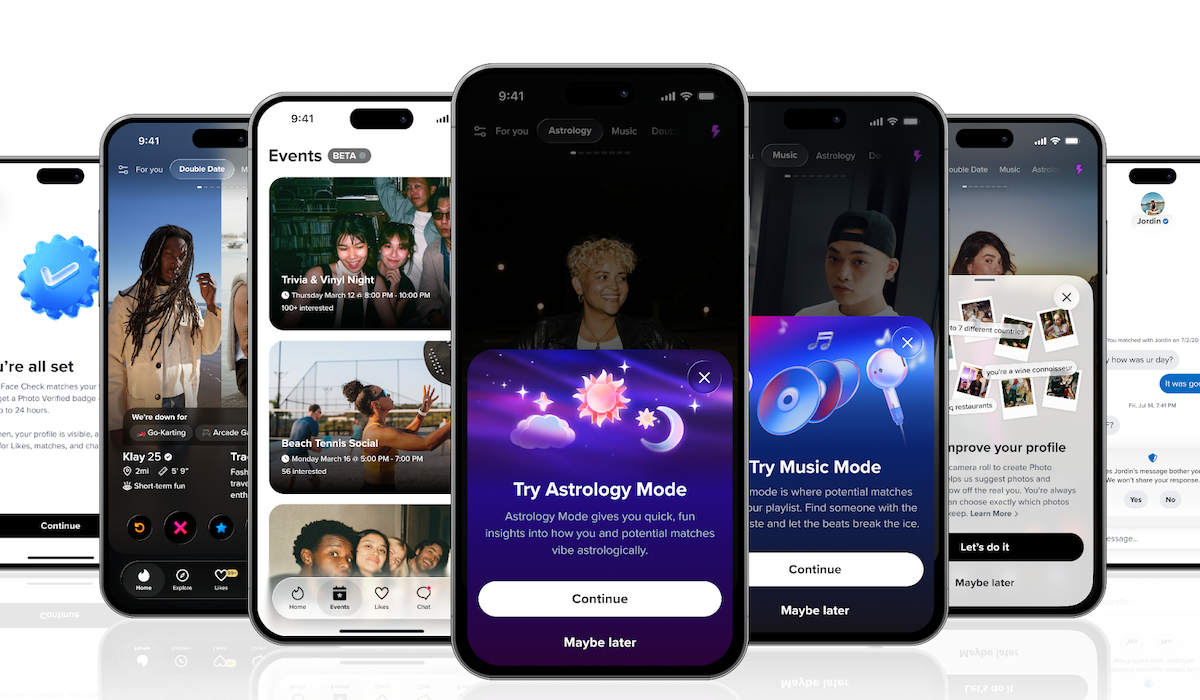


As Gen Z rethinks the point of online dating, Tinder is betting on real-life connection, expanding its in-app Events feature to dozens of new cities by September. The push comes as Tinder’s revenue and users keep declining. Owner Match Group is planning for a future where swiping may fade, and shared experiences take its place.
Key Takeaways
- Tinder is expanding its Events feature to 26 cities by September
- It expects the feature in 75 cities by the end of 2026
- Events focuses on group activities, not one-on-one dates
- Tinder’s Q2 monthly active users fell 7%, revenue declined
- Match Group is planning for a future beyond traditional dating apps
What Tinder Announced
On Match Group’s Q2 earnings call, Tinder said it’s expanding its in-person events to dozens of new cities by September as it tries to stay relevant.
The expansion timeline:
- March: Events launched as a pilot in Los Angeles
- Since March: Rolled out to nine additional US and European cities
- By end of September: Reaching 26 cities globally
- By end of 2026: Expected in 75 cities
Events is now live in cities including New York, Dallas, Denver, Kansas City, Phoenix, Berlin, Munich, Zurich, and Geneva.
How Events Works
The feature is built around shared activities rather than dates:
- Users browse a dedicated Events tab, mark interest, and buy tickets
- They receive a special profile badge after checking in at an event
- Activities range from candlelight ceramics classes and group hikes to DJ nights, game nights, and coffee socials
- Photo verification is required for full access
The early signal was strong: a 60-person candlelight ceramics class in LA sold out within a day, and the pilot drew engagement from 66% of eligible active users across 60-plus events.
The Business Behind the Bet
The expansion comes against a tough financial backdrop. Match Group reported that Tinder’s revenue declined in the quarter, sending the stock down over 10% after hours.
The user picture:
- Tinder’s monthly active users fell 7% in Q2, slightly better than the prior quarter’s 8% decline
- CEO Spencer Rascoff said daily active user growth should turn positive “any day now”
- The app hasn’t reported positive user growth in more than three years
Match, which also owns Hinge, OkCupid, and others, is planning for a future where online dating itself may become passé.
The Low-Cost Strategy
Tinder isn’t running the events itself. Rascoff said Events is scaled via a low-cost model built around partnerships with leading event providers, meaning Tinder makes the events discoverable rather than hosting them.
The upsides of that approach:
- Lower cost and risk than directly running events
- Valuable data if Tinder later wants to invest more directly
- Value that extends beyond attendees, as the CEO noted, by reshaping Tinder’s brand around real-life connection
Why It Matters
The expansion reflects a genuine cultural shift. Gen Z increasingly seeks connection through shared experiences rather than intimidating one-on-one first dates, and Tinder is trying to meet that mood before the swiping model erodes further.
The bigger stakes:
- Tinder is fighting to reverse years of user and revenue decline
- The move is a hedge against a future where dating apps lose their grip
- If group experiences prove stickier than swiping, they could redefine how the app works
For a company whose core product has struggled for years, betting that a pottery class can outperform the swipe is a telling sign of where Tinder thinks dating is heading.
Digital Trendings is your trusted source for AI news and updates, stay tuned for more.


