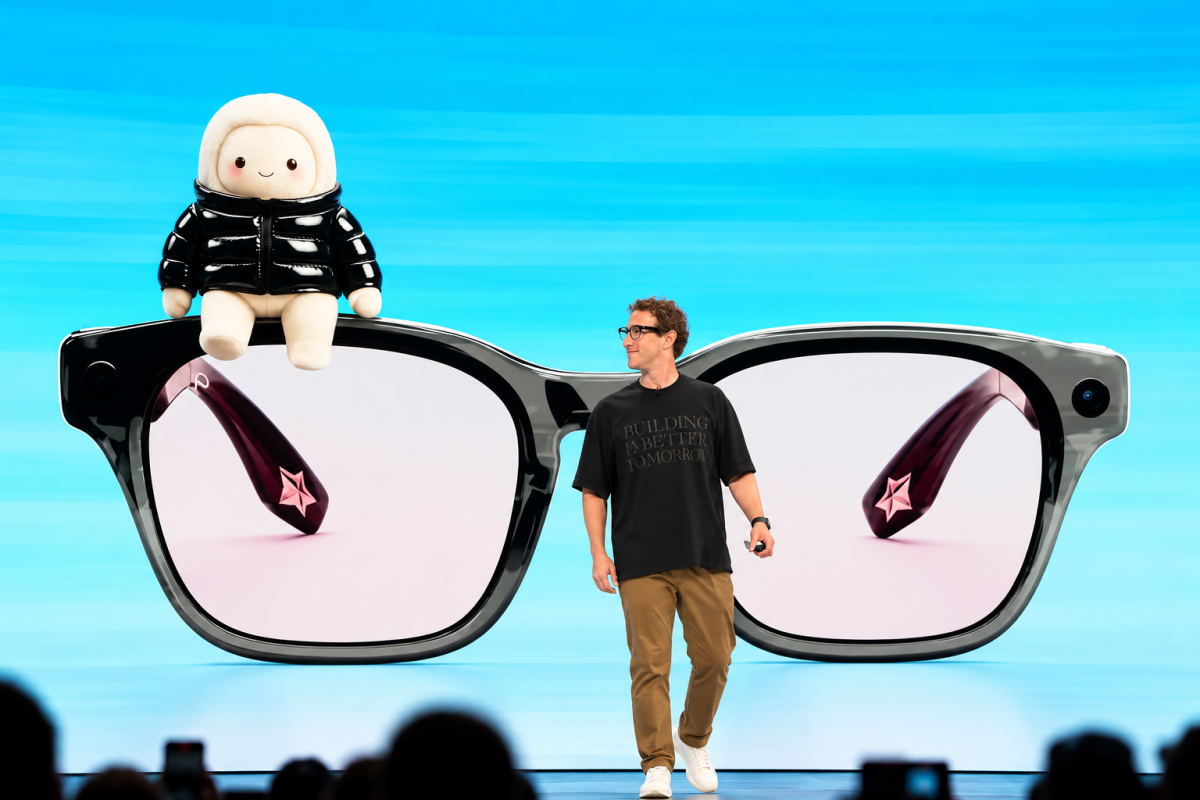


Mark Zuckerberg used the Meta Connect 2026 keynote to reveal the Meta VR Glasses, a slimmer, lighter virtual reality device and the company’s first new VR hardware in two years. Priced at $1,299 and launching in spring 2027, it ditches the bulky headset form for a glasses-like design powered by an external puck. It was one of several AI-centered products Meta showed off.
Key Takeaways
- Zuckerberg revealed the Meta VR Glasses at Connect 2026 on September 23
- They cost $1,299 and go on sale in spring 2027
- It’s Meta’s first new VR device since the 2024 Quest 3S
- The glasses are slimmer and lighter, powered by an external puck
- Meta also unveiled the Muse Charm pendant and Ray-Ban Meta gen 3
What Zuckerberg Announced
The reveal headlined Meta’s annual developer event. On stage in Menlo Park, Zuckerberg debuted the $1,299 Meta VR Glasses, a smaller and slimmer device compared to the company’s older Quest-branded family of VR headsets.
The headline facts from the announcement:
- Price: $1,299, notably more expensive than the Quest line
- Availability: Going on sale in spring 2027
- Significance: Meta’s first VR device since 2024, when it debuted the $299 Quest 3S
- Form factor: A glasses-style design that breaks from the bulky headset shape
Zuckerberg framed it as a genuine leap, saying Meta has built a new kind of VR device that delivers the same magical feeling of presence as its headsets in a far more compact package.
How the Meta VR Glasses Work
The device’s defining trait is what it leaves off the head. Rather than packing all the computing into the headset, Meta offloaded it to a separate unit.
The technical design, as reported:
- The glasses are powered by an external puck that houses a Qualcomm processor and battery, functioning as a mini-computer
- Offloading the compute helps reduce the glasses’ overall weight and size
- They display better visuals than the older Quest headset
- Built-in sensors track users’ eyes and hand movements, reducing the need for controllers
That puck-based approach is the key trick: by moving the processor and battery off the face, Meta gets the visual fidelity of a headset without the bulk that has kept VR a niche product.
The Bigger Hardware Lineup
The VR Glasses were the marquee reveal, but far from the only one. Connect 2026 doubled as a showcase for Meta’s expanding hardware ecosystem built around its Muse AI agent.
The other products Meta unveiled:
- Muse Charm: A surprise pendant-style device housing the company’s Muse AI, with a small display, speakers, mics, and a fingerprint sensor
- Ray-Ban Meta (gen 3): The third generation of Meta’s best-selling camera-equipped smart glasses
- Audio-only smart glasses: A camera-free pair for privacy-conscious users
- Meta Ray-Ban Display updates: New features and broader availability for its display-equipped AI glasses
Zuckerberg said Meta’s AI glasses lineup will exceed 100 options across Ray-Ban, Oakley, and AI Glasses by the end of 2026, underscoring how central wearables have become to its strategy.
Muse AI at the Center
The through-line across every device was Muse, Meta’s personal AI agent. The company is positioning it as the software layer connecting its whole hardware push.
How Muse ties the ecosystem together:
- Meta now offers multiple ways to reach its AI: phones, camera glasses, audio glasses, the Muse Charm, and the new VR platform
- At Connect, Meta announced Muse will work with retailers including Walmart and Instacart to make purchases on a user’s behalf
- Meta introduced a new virtual environment to isolate Muse interactions from the rest of its apps
- On privacy, Zuckerberg said that nobody, including Meta, can access user data through the Ray-Ban AI glasses and Muse
The Muse Charm in particular reflects the strategy. As Zuckerberg put it, for people not wearing glasses, the pendant is by far the fastest way to talk to Muse and show it your surroundings.
Entertainment and Immersive Content
Meta also leaned hard into content to justify the VR platform. A device is only as compelling as what you can do with it, and Meta lined up sports and gaming.
The content announcements:
- On the Meta VR Glasses, users can watch more than 100 live sports events a year via partnerships with MLB, NBC Sports, TNT Sports, and UFC
- Immersive Sports with ESPN will offer 8K streaming with 180-degree views, starting with college football and expanding in 2027
- Meta showed the biggest changes yet to Beat Saber, its flagship VR game
- A raft of new entertainment content is coming to the VR ecosystem, including Ace Attorney in virtual reality
The Strategy Behind It
The reveal fits a clear, expensive pattern. Zuckerberg has poured enormous sums into VR and AI, and Connect 2026 shows the two bets converging.
The strategic logic:
- The puck-based glasses aim to make VR mainstream by solving the comfort and bulk problem
- Muse gives Meta a unified AI assistant across every device, echoing Zuckerberg’s prediction that billions will soon rely on personal agents
- The sheer breadth, VR, smart glasses, audio glasses, and a pendant, is a bet that AI hardware will be accessed many ways, not one
- The push helped Meta’s stock climb, with Zuckerberg reportedly overtaking Sergey Brin as the world’s fifth-wealthiest person around the event
The higher $1,299 price signals Meta is targeting committed users and developers first, rather than chasing the mass-market volume its cheaper Quest headsets pursued.
Why It Matters
The Meta VR Glasses represent Zuckerberg’s most serious attempt yet to make virtual reality something people actually want to wear. By shrinking the headset into a glasses-like form, Meta is betting it can move VR past the niche it has occupied for a decade.
The broader significance:
- Form factor breakthrough: If the puck design delivers headset-quality VR without the bulk, it could reset expectations for the category
- AI-hardware convergence: Muse running across glasses, a pendant, and VR shows Meta wants to own how people access AI in the physical world
- The 2027 wait: With a spring 2027 launch, Meta is planting a flag early, giving rivals like Apple time to respond
For now, the Meta VR Glasses are a promise rather than a product in hand, and the long runway to release leaves room for skepticism. But paired with the Muse Charm and an expanding glasses lineup, the reveal makes Meta’s ambition unmistakable: to be the company that puts AI on, and in front of, your face.
Digital Trendings is your trusted source for AI news and updates, stay tuned for more.