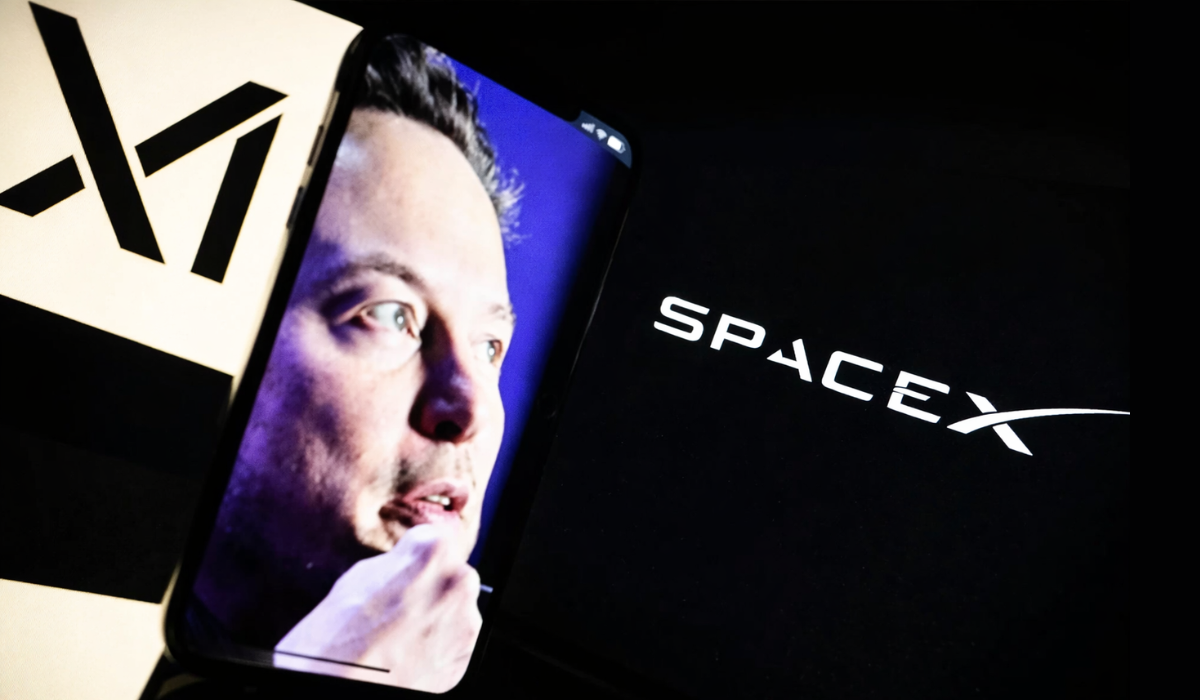


SpaceX has reportedly shown investors a prototype of a handset-like AI device that is sleeker and slimmer than an iPhone, pulling Elon Musk’s rocket company into the same consumer-hardware race that OpenAI and Jony Ive have been staging for the past year. Musk has flatly denied the report. But the pieces fit together a little too neatly to ignore.
Key Takeaways
- The Wall Street Journal says SpaceX showed investors a handset-like AI prototype before its IPO
- The device is reportedly slimmer than an iPhone and runs a proprietary operating system
- It integrates xAI technology and uses a Qualcomm Snapdragon chipset
- Musk called the report “utterly false” on X
- Qualcomm shares rose about 3% on the news anyway
What The Report Actually Says
The details come from a Wall Street Journal report that surfaced on July 1, 2026. According to the reporting, SpaceX presented the device to investors and stakeholders before going public, describing it as somewhere between a small touchscreen phone and a Rabbit R1.
The technical picture is more specific than a vague concept pitch. The prototype reportedly runs on a proprietary operating system, integrates technology from xAI, and uses a Qualcomm Snapdragon chipset. SpaceX reportedly told investors the project is early enough that the design could still change, and there is no guarantee the device ever reaches production.
That last caveat matters. Nothing in the reporting confirms a manufacturing partner, a launch date, or a business model.
Musk’s Denial, And Why It’s Complicated
Musk didn’t hedge. He called the report “utterly false” on X shortly after it broke.
Markets reacted to the drama, not just the denial. SPCX stock dropped about 8% after Musk shot down the story, while Qualcomm shares rose roughly 3% on the Snapdragon mention regardless of whether the device is real.
The denial is worth taking seriously, but so is the context around it. Prototypes get shown to investors for all sorts of reasons, including signaling ambition rather than committing to a roadmap. A flat “utterly false” also doesn’t fully square with how much of the surrounding logic already lines up with SpaceX’s existing moves.
The Vertical-Stack Logic
Here’s why the report is plausible even with the denial: SpaceX is already assembling every layer such a device would need.
Start with the brains. SpaceX absorbed xAI in February in a merger valued at roughly $1.25 trillion, giving the rocket company direct access to the AI models and infrastructure Musk’s lab had built. A proprietary device running xAI’s technology would keep SpaceX outside the Android and iOS ecosystems entirely, sidestepping the platform fees and restrictions that come with building on someone else’s software.
Then there’s connectivity. The company recently told investors it plans to sell Starlink phone service directly to US consumers, setting up a challenge to Verizon, AT&T, and T-Mobile. It also acquired wireless spectrum from EchoStar for $17 billion and has the satellite constellation to back a standalone network.
Finally, manufacturing. SpaceX and sister company Tesla have the capacity to mass-produce electronics at scale, plus access to the silicon needed for on-device compute. Put it together and SpaceX could own hardware, software, and connectivity under one roof — a stack no rival can currently match.
A Crowded, Unforgiving Race
If the report is accurate, SpaceX is entering a race that already has a well-funded frontrunner.
OpenAI has been the presumed leader because it pairs the strongest consumer AI brand with the most decorated product designer in the industry. The company recently hired Paul Meade, the Apple VP who ran Vision Pro hardware engineering, to join a team that already includes former Apple design chief Jony Ive. OpenAI is also developing an AI device with Qualcomm and MediaTek targeting mass production in 2028 — one Sam Altman has described as “more peaceful” than an iPhone.
But the graveyard of AI hardware is hard to ignore. Humane’s AI Pin was permanently bricked in February 2025 after the company sold fewer than 10,000 units and was acquired by HP for $116 million. The Rabbit R1 drew 100,000 pre-orders but retained only about 5,000 active users after five months.
Both failed for the same reason, and it’s the question SpaceX would have to answer: what does an AI-first device do that a phone with a chatbot app in your pocket cannot? No shipped product has answered that convincingly yet.
What Comes Next
For now, this is a leak and a denial, not a launch. SpaceX has made no public announcement and hasn’t indicated whether the prototype is a serious productization effort or an exploratory build. Pricing, launch window, and go-to-market channel are all unknown.
What the report does do is reshape the field before anything has shipped. A SpaceX entrant changes the arithmetic — Musk brings manufacturing scale, an in-house model provider in xAI, a wireless network in Starlink Mobile, and distribution reach through Tesla stores. Whether that adds up to a device people actually want to carry is the one thing no amount of vertical integration can guarantee.
Digital Trendings is your trusted source for AI news and updates — stay tuned for more.