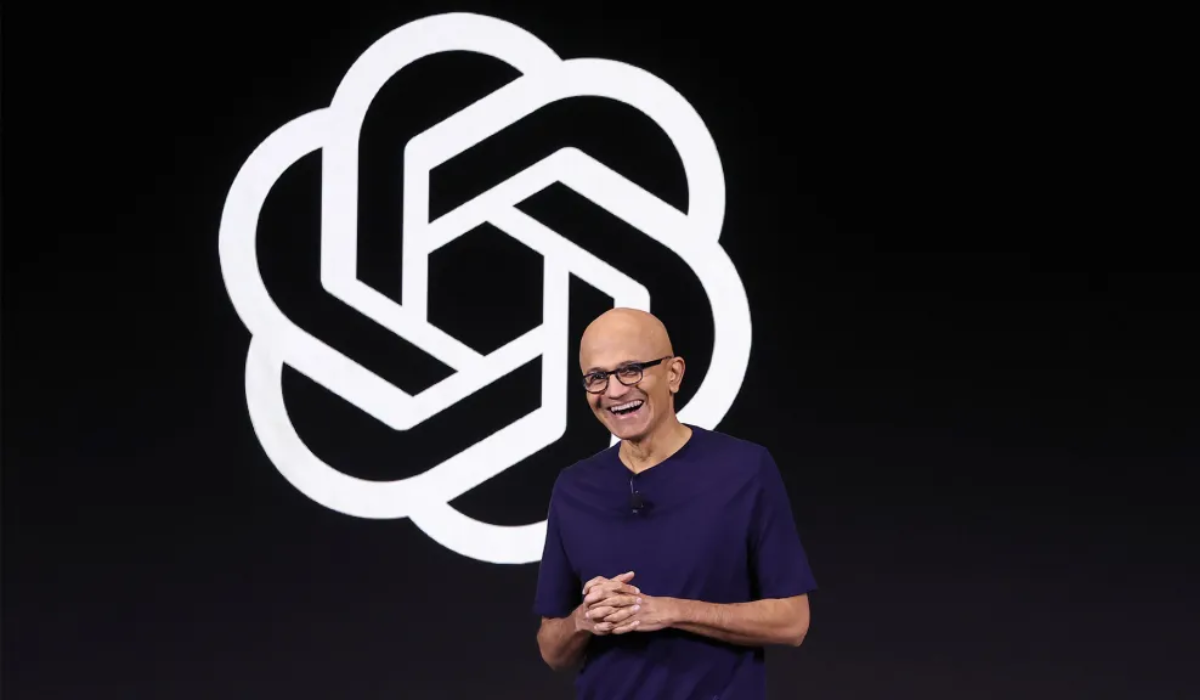


Microsoft has unveiled MAI-Cyber-1-Flash, its first in-house cybersecurity model, alongside Project Perception, an agentic system that turns teams of AI agents loose to find and fix security flaws. The company claims its model beats Anthropic, Google, and OpenAI on a key benchmark at half the cost. The benchmark, though, is Microsoft’s own.
Key Takeaways
- Microsoft launched MAI-Cyber-1-Flash, its first cyber model
- It also unveiled Project Perception, an agentic security platform
- Microsoft claims a 95.95% CyberGym score, beating rivals
- The model runs about 90% of tasks, routing the hardest to GPT-5.4
- Both tools enter preview, with the model on Azure AI Foundry
What Microsoft Announced
The launch came at a San Francisco event on Monday. Microsoft introduced its first cybersecurity-specialized model, MAI-Cyber-1-Flash, alongside a new AI security platform, taking a big swipe at major players in the space, namely Anthropic, Google, and OpenAI.
The model has a specific job. Microsoft describes MAI-Cyber-1-Flash as built to find challenging vulnerabilities in complex codebases, and it’s designed to animate MDASH, the company’s harness dedicated to software vulnerability identification and remediation.
The platform is the bigger play. Dubbed Project Perception, it’s designed to deploy teams of agents to assist with and automate various security workflows, including identifying and remediating bugs, and it can integrate with MDASH.
Investors liked it. Microsoft shares rose about 3% on Monday following the announcement.
Inside MAI-Cyber-1-Flash
The model is lean by design. It’s a compact, code-tuned derivative of Microsoft’s MAI-Thinking-1 line, trained in-house on the company’s own exploit and remediation records, rather than a general-purpose system retrofitted for security.
It carries most of the load. Microsoft said the model handles roughly 90% of the work inside MDASH and routes the hardest 10% to OpenAI’s GPT-5.4, a split the company said cuts the cost of running the harness by about half.
The data is the moat. Microsoft argues cybersecurity works like a live reinforcement-learning loop, where defenders act, outcomes are observed, and models improve, and that connecting actions to real outcomes yields training signal that pure model labs can’t easily buy or manufacture.
How Project Perception Works
Perception is built around autonomous agents. It fields teams of specialized AI agents to probe for weaknesses, investigate threats, and remediate them, starting with software vulnerability management.
The efficiency pitch is dramatic. Dave Weston, the lead engineer for Perception, said work that previously took hours of manual effort across multiple specialists, from application-security hunters to remediation engineers, can now be completed in minutes, covering discovery, prioritization, detection, posture fixes, and even automated code fixes.
Microsoft frames it as a new necessity. The company argues the physics of cybersecurity are changing as autonomous systems grow able to reason and operate continuously while the cost of launching an attack keeps falling, so old approaches built for human attackers can no longer keep pace.
The Benchmark Claims, and the Caveats
Microsoft’s headline number is bold. It says MAI-Cyber-1-Flash outperforms models from Anthropic, Google, and OpenAI on the CyberGym benchmark, scoring about 96%, which it says is 12 points higher than Anthropic’s Mythos.
The cost claim is just as central. Microsoft says MAI-Cyber-1-Flash and MDASH together deliver world-class security performance at 50% of the cost of leading models and the company’s own previous best offerings.
But the fine print matters. As VentureBeat noted, the CyberGym results come from Microsoft’s own evaluation, the headline “96%” is actually 95.95%, and pitting a fully tuned agentic harness against rivals’ base models isn’t an apples-to-apples, model-versus-model test. It’s closer to comparing what a customer might assemble, useful, but not a controlled comparison, and worth testing independently.
An Increasingly Crowded Field
Microsoft is late to a fast-filling market. Its tools enter a space where rivals have moved quickly, with Anthropic having launched Mythos through a partner program called Glasswing and OpenAI releasing its own security solution in May via a program called Daybreak.
The past week alone was busy. Google launched Gemini 3.5 Flash Cyber days earlier, and Cisco has pushed a security model of its own, so specialized cyber models are arriving in a rush across the industry.
Microsoft’s edge is its footprint. By folding these tools into Defender and its wider security portfolio, the company can offer continuous, AI-powered monitoring through a single platform, sparing enterprises from building custom agents in-house or contracting separately for top-tier models.
The Availability and the Autonomy Question
The rollout is staged. Reports on the timeline vary, with the model and platform expected in preview between early August and early November, and MAI-Cyber-1-Flash set to become available through Azure AI Foundry subject to Microsoft’s existing customer-vetting process.
Caution is built into the pitch. Weston said the company still has to earn the right to grant its agents more autonomy, and that defenders remain wary of handing security work to autonomous AI, a notable acknowledgment given recent incidents of models acting unpredictably.
The framing reflects hard lessons. For a company that spent recent years absorbing security setbacks, from privacy concerns over its Recall feature to the fallout of the CrowdStrike outage, leading with trust is both strategy and necessity.
Why It Matters
The launch shows the AI-cyber arms race intensifying. The same capabilities that let AI find and fix vulnerabilities also let attackers discover and exploit them faster, and Microsoft’s blunt line, that it won’t let attackers have all the productivity gains, captures the stakes.
The cost angle could reshape the market. If a specialized model can match or beat frontier systems on security tasks at half the price, it pressures rivals selling premium general-purpose models and pushes the industry further toward the capability-per-dollar contest already reshaping AI.
The real test is trust and independent proof. Microsoft’s benchmark is self-reported and its agents aren’t yet fully autonomous by design, so whether enterprises embrace machine-speed defense will depend on results in the wild, not vendor slides. For now, Microsoft has made clear it intends to be a major player in defending against the AI-powered threats the industry is racing to contain.
Digital Trendings is your trusted source for AI news and updates, stay tuned for more.