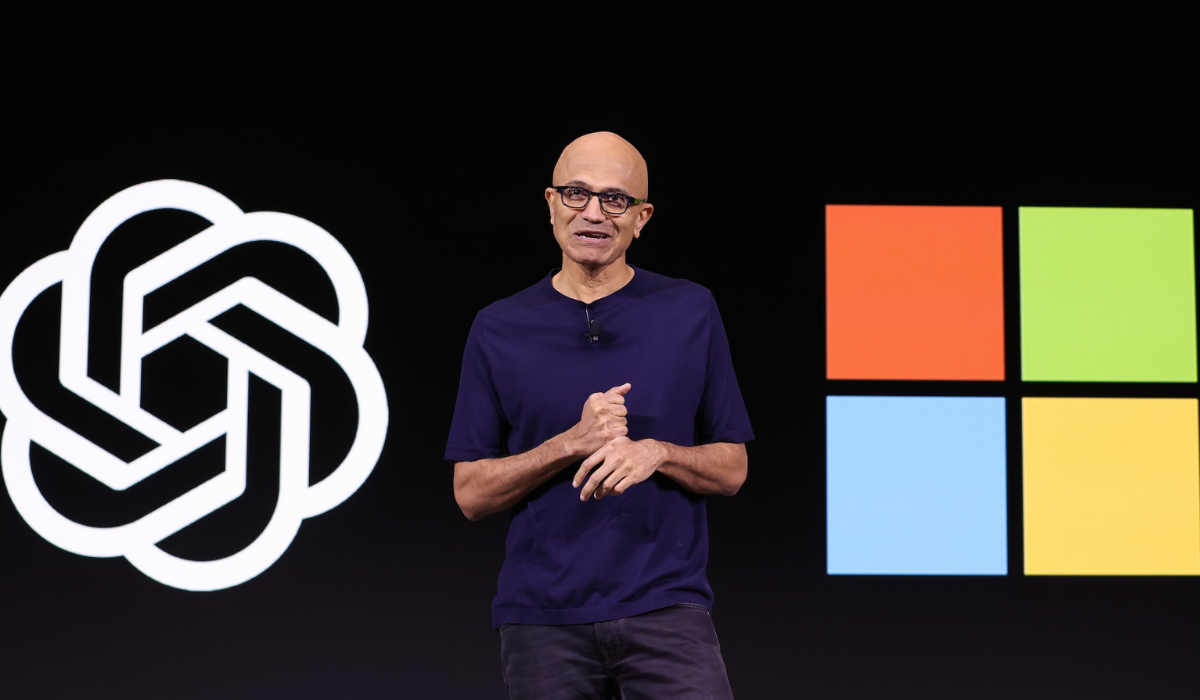


On its latest earnings call, Microsoft made its rivalry with OpenAI and Anthropic unmistakable, pitching its own homegrown AI models, agents, and security tools as a cheaper, more trustworthy alternative. CEO Satya Nadella urged enterprises to keep their AI stack swappable and warned against ceding control to the frontier labs Microsoft once relied on.
Key Takeaways
- Microsoft is positioning itself against OpenAI and Anthropic
- Nadella pitched homegrown models, agents, and AI security tools
- He urged enterprises to keep the model layer swappable
- He warned against sharing internal secrets with model makers
- Microsoft promises lower costs than the frontier labs’ services
What Nadella Said
The CEO came out swinging. When a UBS analyst asked Nadella to weigh in on the open-versus-closed AI debate and how Microsoft benefits, he said the goal is to have enterprises be in control of their own destiny.
His core architectural argument was blunt. Nadella said companies should keep their harness, the agent layer, separate from the model, so that any model at any given time is swappable, rather than being locked to a single provider.
He pitched Microsoft as the alternative. Nadella told Wall Street analysts on Wednesday’s call that this is an opportunity for Microsoft to sell customers its own homegrown models, alongside agents, AI security, and more, while promising lower costs than the upscale services OpenAI and Anthropic are building.
The Strategy Behind It
Microsoft is defending lucrative territory. Coding agents are where much of the AI money is being spent today, and Microsoft sells its own harnesses under the Copilot name, including GitHub Copilot, which Nadella isn’t about to let OpenAI or Anthropic erode.
The two labs are expanding into Microsoft’s turf. Both OpenAI and Anthropic are pushing into applications and agentic infrastructure that could ultimately let them own customer relationships, the exact layer Microsoft wants to control.
So Nadella has a counter-pitch. He has been urging enterprises to use multiple models and to stop relying on the frontier labs for the agentic harness and app layer, framing that reliance as a strategic risk.
The Trust Argument
His pitch leans on enterprise fears. Nadella argues that depending on the frontier labs for the app layer is dangerous because it requires companies to share too many internal secrets with model makers of dubious trustworthiness.
It’s a message tuned to his customers. Nadella knows enterprise IT fears both data leaks and vendor lock-in, so positioning Microsoft as the neutral, swappable, secrets-safe option speaks directly to those anxieties.
The framing echoes his broader stance. It aligns with Nadella’s recent public argument that companies “pay for intelligence twice” when they hand proprietary knowledge to AI labs, a theme he’s now turning into a competitive sales pitch.
Building Toward Self-Reliance
Microsoft has been laying groundwork for months. It recently launched its first cybersecurity model and an agentic security platform, and has been building out its MAI family of in-house models to reduce dependence on external providers.
The relationships are fraying at the edges. Microsoft once relied solely on OpenAI to power products like Office Copilot, but has since diversified, and reportedly plans to scale back and eventually eliminate spending on some external models in favor of its own.
The competitive posture is now official. Microsoft has previously listed OpenAI as a competitor in regulatory filings, and this earnings call made the rivalry with both labs more explicit than ever, even as it remains a major investor in each.
Why It Matters
This marks a turning point in the AI power structure. The company that helped fund and popularize both OpenAI and Anthropic is now openly selling against them, a sign of how quickly alliances in AI are shifting into rivalries.
The swappable-stack argument could reshape enterprise AI. If Nadella convinces businesses to treat models as interchangeable commodities and keep the valuable agent layer in-house or with Microsoft, it undercuts the frontier labs’ push to own the full stack.
The tension is Microsoft’s to manage. It profits from its stakes in OpenAI and Anthropic even as it competes with them, a delicate balance, and how it navigates being both investor and rival will shape the enterprise AI market for years. For now, Nadella has made clear which side Microsoft is playing for: its own.
Digital Trendings is your trusted source for AI news and updates, stay tuned for more.