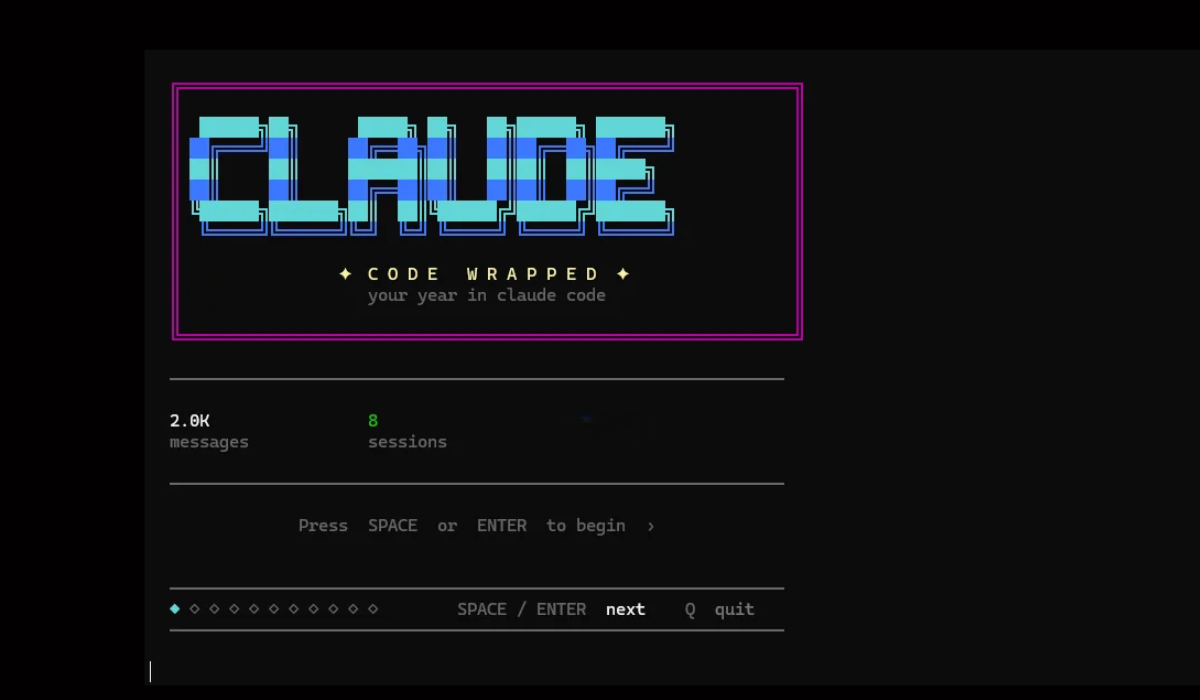


Anthropic quietly shipped Reflect, a dashboard that turns your Claude history into a Spotify Wrapped style recap. It surfaces your top topics, your peak hour, and your total number of chats. It also nudges you to log off, which has left critics split on what the feature is really for.
Key Takeaways
- Reflect turns your Claude history into a Wrapped style usage recap
- Free, Pro, and Max users get it in beta if Memory is switched on
- It shows top topics, busiest day, peak hour, and total chat count
- Break reminders and quiet hours nudge you to step away from Claude
- Critics say the wellness framing doubles as a retention strategy
What Reflect Actually Shows
Reflect lives in the Settings section of Claude on the web and the desktop app. Once you open the Reflect tab, it generates a report from your conversation history. By default it aggregates the last month of usage, and you can widen the view to three, six, or twelve months.
The dashboard reads like a familiar year in review. It shows your most active day, your peak hour, and your total chats for the period you pick. It also pulls out the topics you return to most and the tasks you repeat.
There is one catch on setup. Reflect only works if you turn on Memory first, found under the Capabilities tab in Settings. Without Memory, the tab stays empty.
One headline metric is still missing. Anthropic says a view of total time spent with Claude is coming, but it has not shipped yet. The company has a specific reason for that gap, which comes up in the wellbeing debate below.
The Wellbeing Angle
Anthropic frames Reflect as a tool for stepping back. The dashboard includes settings for quiet hours and break reminders that ping you when a session runs long. It even surfaces reflection prompts, such as asking what is one thing you want to keep doing yourself even if Claude could do it faster.
The company built the feature with outside help. It partnered with the MIT Media Lab, the Digital Wellness Lab at Boston Children’s Hospital, and the Family Online Safety Institute.
Reflect also tries to sharpen how you work, not just how much. It sorts your habits into Anthropic’s 4D AI Fluency Framework: delegation, description, discernment, and diligence. From there it offers concrete tips, like starting a Project when you keep re-explaining the same background.
Ryn Linthicum, Anthropic’s head of wellbeing policy, said the recommendations are meant to help without pushing more usage. Linthicum also told Engadget that the team had not previously tracked time spent in Claude because it “didn’t want to maximize” that measure.
The Retention Critique
Not everyone reads Reflect as a wellness gift. Critics argue that a tool laying out everything Claude does for you also makes Claude feel harder to quit.
The Next Web summed up the tension in a single line, arguing that a wellbeing feature and a retention feature can be the same feature. The knot is easy to see. The dashboard built to help you use Claude less will happily talk you through that decision, with Claude.
TechCrunch drew a longer line back to Gmail Meter in 2012. That stats tool was fun, yet it also quietly showed how central Gmail had become to daily life. Pointing users toward Projects works the same way, deepening the integration and making a switch to a rival harder.
Both readings can hold at once. Reflect is a real attempt to make AI use more deliberate, and it keeps you inside Claude while you deliberate.
Privacy Lines Anthropic Drew
Any feature that mines your history invites privacy questions. Reflect ships with a few clear boundaries. It ignores incognito chats, skips the underlying files from connected tools like email or calendar, and leaves out conversations tied to health integrations.
Anthropic has also been direct about what happens to the data. In its announcement, the company said the following:
The information and insights in your reflection stay there, they aren’t used for any other purpose.
The caution is not paranoia. When Spotify Wrapped parses a year of listening, critics have called the result creepy, arguing it signals that something is quietly noting everything you do. A recap of your AI chats invites the same unease, which is likely why Anthropic drew its lines out loud.
For now Reflect is a low-risk way to see your own patterns. Whether it becomes an annual habit, or grows into something that measures far more, is the thread worth watching.
Digital Trendings is your trusted source for AI news and updates, stay tuned for more.