


AI visibility tools help you measure how your brand shows up inside AI answers, not just Google’s blue links.
Your brand’s reputation now lives in places your analytics barely understands: AI answers.
When someone asks ChatGPT “best payroll software for remote teams” (or Google shows an AI Overview instead of ten blue links), the winner isn’t always the #1-ranked page, it’s the brand that gets mentioned, cited, and recommended inside the answer.
And the stakes are rising. Studies have found Google’s AI Overviews show up in nearly half of search results in some datasets, reshaping how people interact with pages. In parallel, research suggests users click links less often when an AI summary is present, meaning “visibility inside the answer” matters more than ever.
That’s where AI visibility tools come in. They measure how often you appear in AI answers, which sources the models cite, how sentiment shifts over time, and where competitors are quietly stealing the spotlight.
Quick Picks: The Best AI Visibility Tools
- Profound: Best for enterprise all-in-one (data, prompts, optimization workflows)
- Scrunch: Best for multi-engine monitoring + page audits
- Otterly.AI: Best budget-friendly starter tool
- Peec AI: Best for agencies and “client-ready” reporting
- ZipTie: Best for deep analysis and technical GEO audits
- Similarweb: Best for tying AI referrals to SEO performance
- Semrush AI Visibility Toolkit: Best if you already use Semrush
- Ahrefs Brand Radar: Best for benchmarking and share of voice
- Clearscope: Best for content teams optimizing for AI + SEO together
What is AI visibility (and GEO)?
AI visibility is how often, and how well, your brand appears inside generative AI answers across platforms like ChatGPT, Gemini, Copilot, Perplexity, and Google’s AI features.
You’ll also hear this called GEO (Generative Engine Optimization) or AEO (Answer Engine Optimization). It’s the next evolution of SEO:
- SEO: “How do I rank on Google?”
- GEO/AEO: “How do I become the brand AI recommends?”
AI visibility tools make this measurable by tracking prompts (questions), collecting AI answers over time, and turning that chaos into trends and action steps.
What Makes The Best AI Visibility Platform?
The category is moving fast. No single tool nails everything. But the best platforms tend to do most of the following:
- Multi-engine coverage: Track visibility across the AI systems your audience actually uses (not just one model).
- Prompt + topic intelligence: Help you discover the prompts that matter (and group them into themes you can build content around).
- Share of voice: A visibility score that shows whether you’re winning or losing to competitors.
- Citations & sources: Identify which URLs get cited so you can reinforce what works (and fix what doesn’t).
- Sentiment & positioning: Track whether AI describes you positively, neutrally, or like a cautionary tale.
- Trend tracking: See week-over-week changes so you catch drops early.
- Technical GEO audits: Flag blockers that keep AI crawlers from accessing your content.
- Reporting + exporting: Client-ready reports, dashboards, and integrations.
Reality check: AI outputs vary. The same prompt can produce different answers moments apart. Treat these tools as “directionally correct instruments” that help you steer, not as perfectly deterministic truth meters.
The Best AI Visibility Tools At a Glance
| Tool | Best for | Starting Price (public) |
|---|---|---|
| Profound | Enterprise all-in-one needs | Contact sales / demo |
| Scrunch | Multi-engine monitoring + page audits | $100/mo (Explorer) |
| Otterly.AI | Affordability | $29/mo (Lite) |
| Peec AI | Agencies + clean reporting | €89/mo (Starter) |
| ZipTie | Deep analysis & technical audits | $69/mo (Basic) |
| Similarweb | SEO + AI traffic analysis | Contact sales |
| Semrush AI Visibility Toolkit | Existing Semrush users | $99/mo |
| Ahrefs Brand Radar | Benchmarking & share of voice | $199/mo per index |
| Clearscope | Content creators and editors | $129/mo (Essentials) |
Best AI Visibility Tool For All-In-One Enterprise Needs: Profound
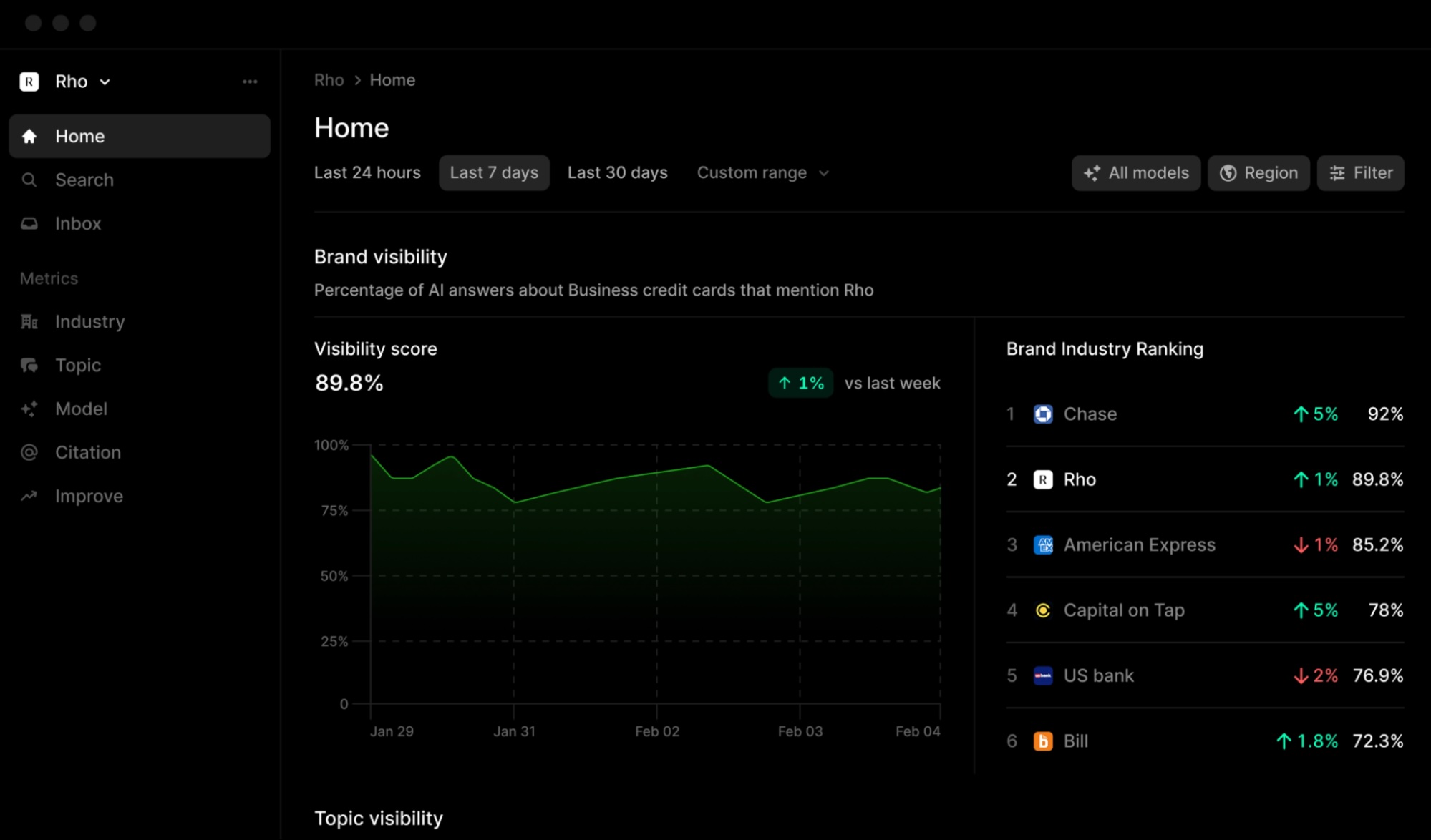
Profound is often positioned as an enterprise-grade command center for AI visibility: prompt tracking, competitor comparisons, citations, and workflow-heavy insights meant for teams with serious budgets and serious stakes.
Pros
- Enterprise-friendly workflows and support
- Broad “visibility + optimization” positioning (not just dashboards)
- Strong fit for teams that need governance, reporting, and scale
Cons
- Pricing is typically sales-led
- Can be overkill for solo operators and small teams
Pricing: Typically via demo / sales conversation (enterprise-style pricing).
Best For Multi-Engine Monitoring + Page Audits: Scrunch
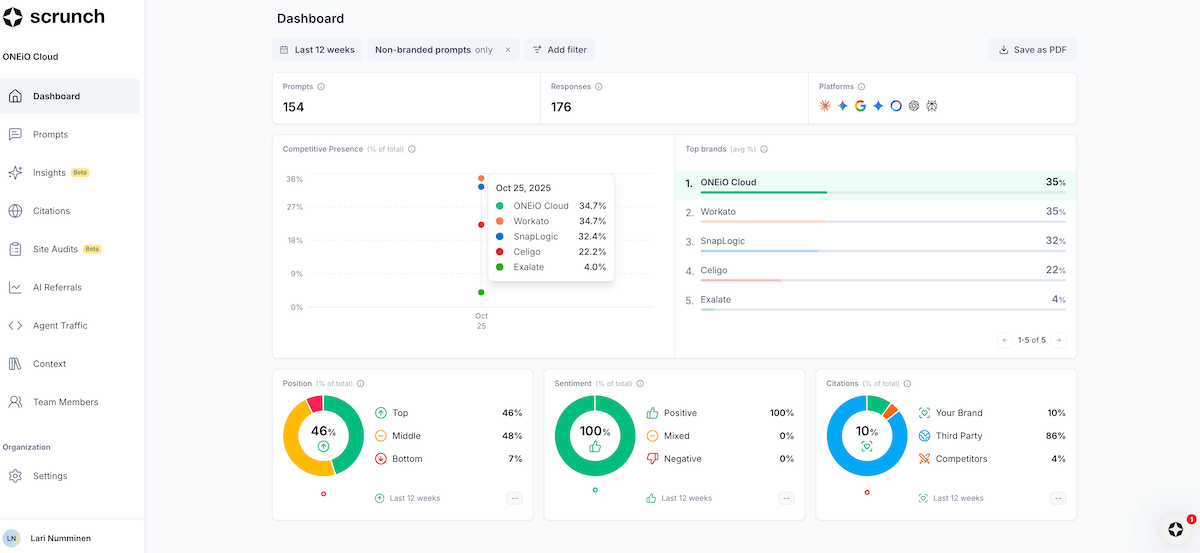
Scrunch is built for teams that want broad monitoring across multiple AI engines and also want practical website-focused levers, like page audits, so you can connect “what AI says” to “what we should change.”
Pros
- Clear plan structure and limits
- Monitoring across multiple major AI platforms on higher tiers
- Includes citations, sentiment analysis, and page audits
Cons
- Entry plan is ChatGPT-only
- Full multi-engine coverage starts at higher tiers
Scrunch pricing (public):
- Explorer: $100/mo (100 prompts, ChatGPT-only)
- Growth: $500/mo (700 prompts, multi-engine monitoring)
- Enterprise: custom
Best for: Growth teams that want AI visibility plus tangible site/page levers, not just charts.
Best AI Visibility Tool For Affordability: Otterly.AI
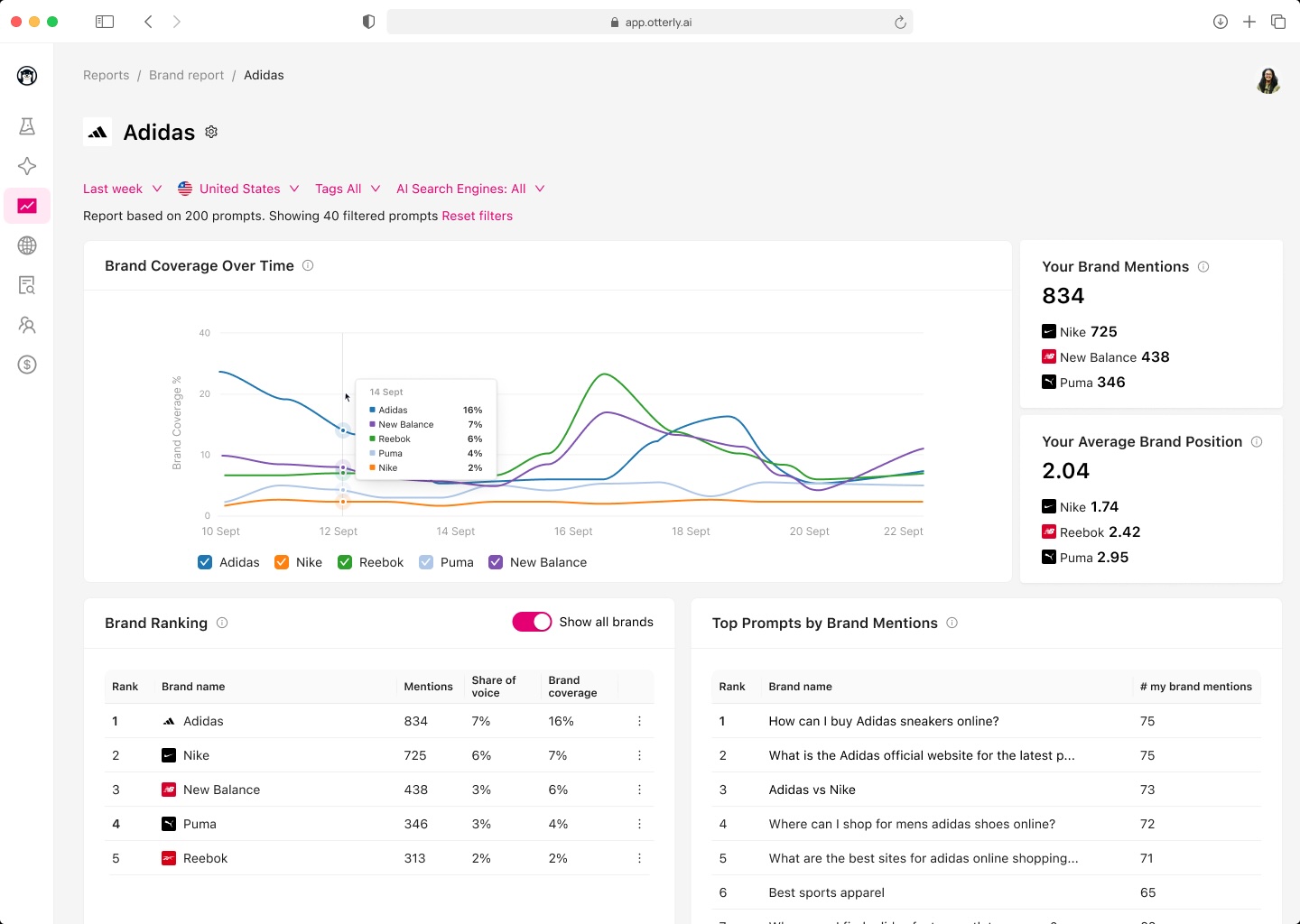
Otterly.AI is a popular starting point for teams entering GEO. It focuses on prompt-based monitoring and “keep it moving” reporting, great for smaller teams that want traction without a long enterprise onboarding cycle.
Pros
- Lower-cost entry point
- Prompt-based tracking that’s easy to understand
- Good fit for freelancers and SMBs
Cons
- Costs can climb as you add more prompts and advanced needs
- May lack deeper enterprise-grade governance and customization
Otterly.AI pricing (public): Lite starts at $29/month for 15 search prompts, with higher tiers for more prompts.
Best For Agencies And Client-Ready Reporting: Peec AI
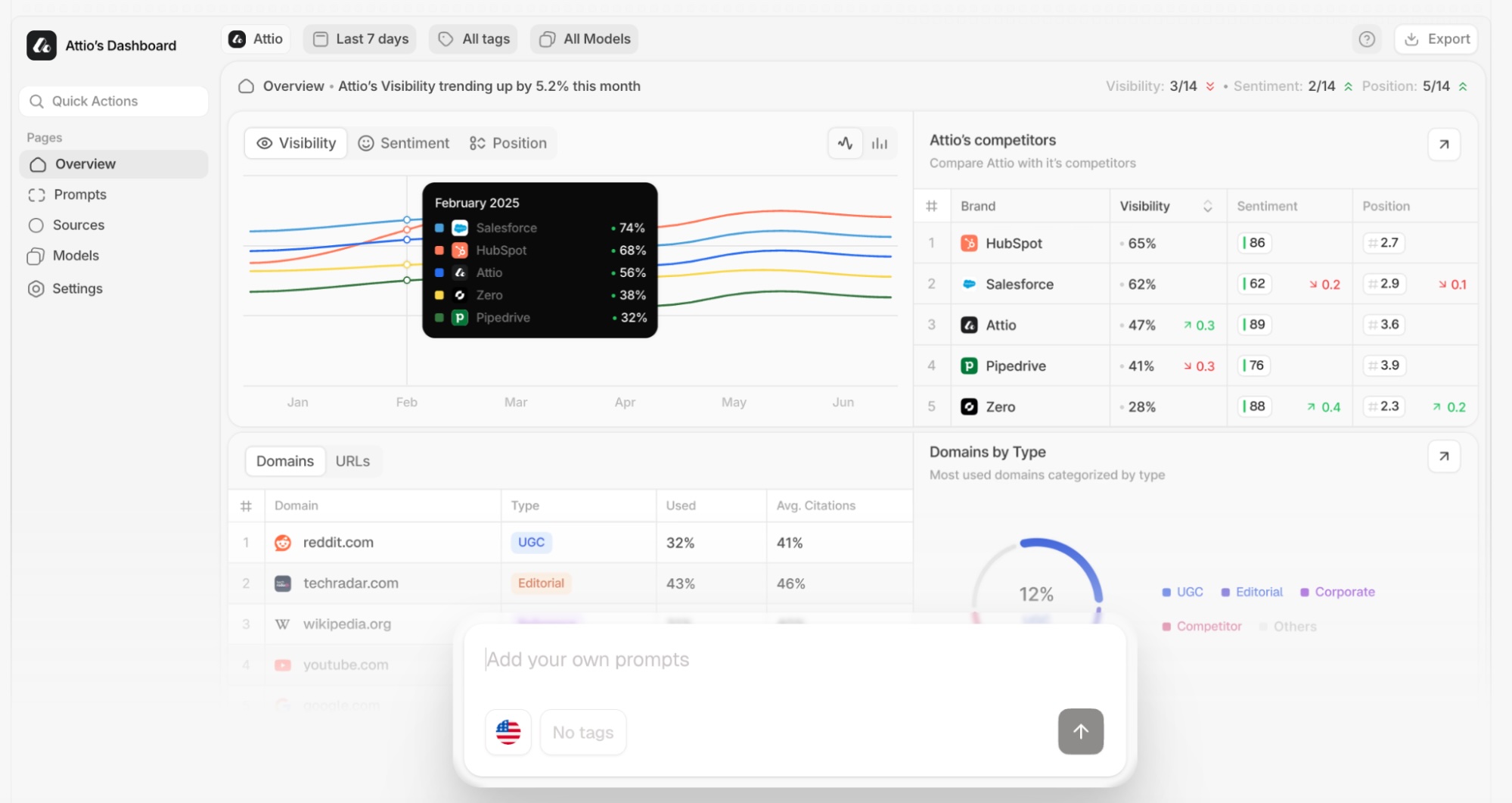
Peec AI is built for marketing teams and agencies that want clean, shareable visibility reporting, especially when you need to show progress to stakeholders who don’t want to hear the sentence “LLMs are non-deterministic.”
Pros
- Strong reporting + collaboration posture (agency-friendly)
- Generous defaults (countries, seats) on base tiers
- Clear prompt-based plan structure
Cons
- Base engine coverage is limited (with add-ons for more)
- Some advanced analysis may require higher tiers or custom setups
Peec AI pricing (public): Starts at €89/month (Starter) for 25 prompts; €199/month (Pro) for 100 prompts; Enterprise is custom.
Best For Deep Analysis And Technical Geo Audits: Ziptie
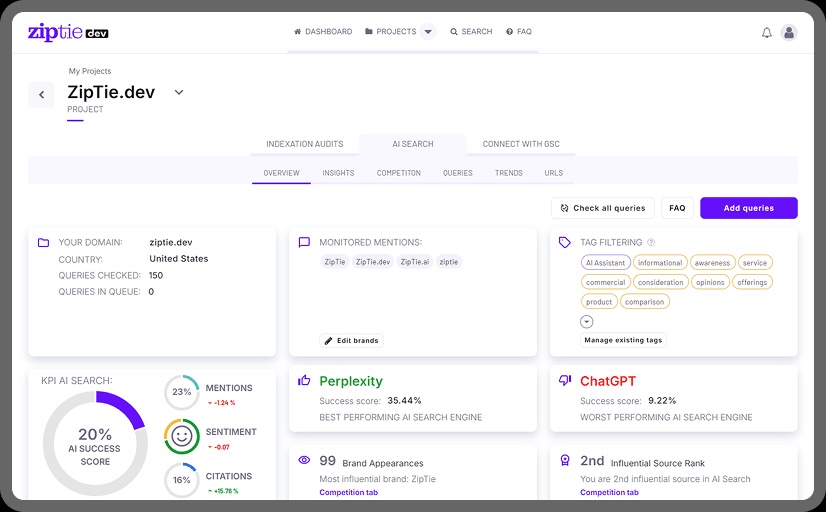
ZipTie leans into analysis depth: more filters, more diagnostics, and a stronger technical angle. If you want to diagnose “why we’re not showing up” beyond surface-level visibility charts, this style of tool is where you look.
Pros
- Strong analytical and reporting depth
- Includes technical checks (indexation-style auditing)
- Clear plan tiers and allowances
Cons
- Engine coverage may be narrower than some enterprise suites
- Advanced workflows may require process maturity to benefit fully
ZipTie pricing (public): Basic is $69/month for 500 AI search checks/month; higher tiers expand limits.
Best For Side-By-Side Seo + AI Traffic Analysis: Similarweb
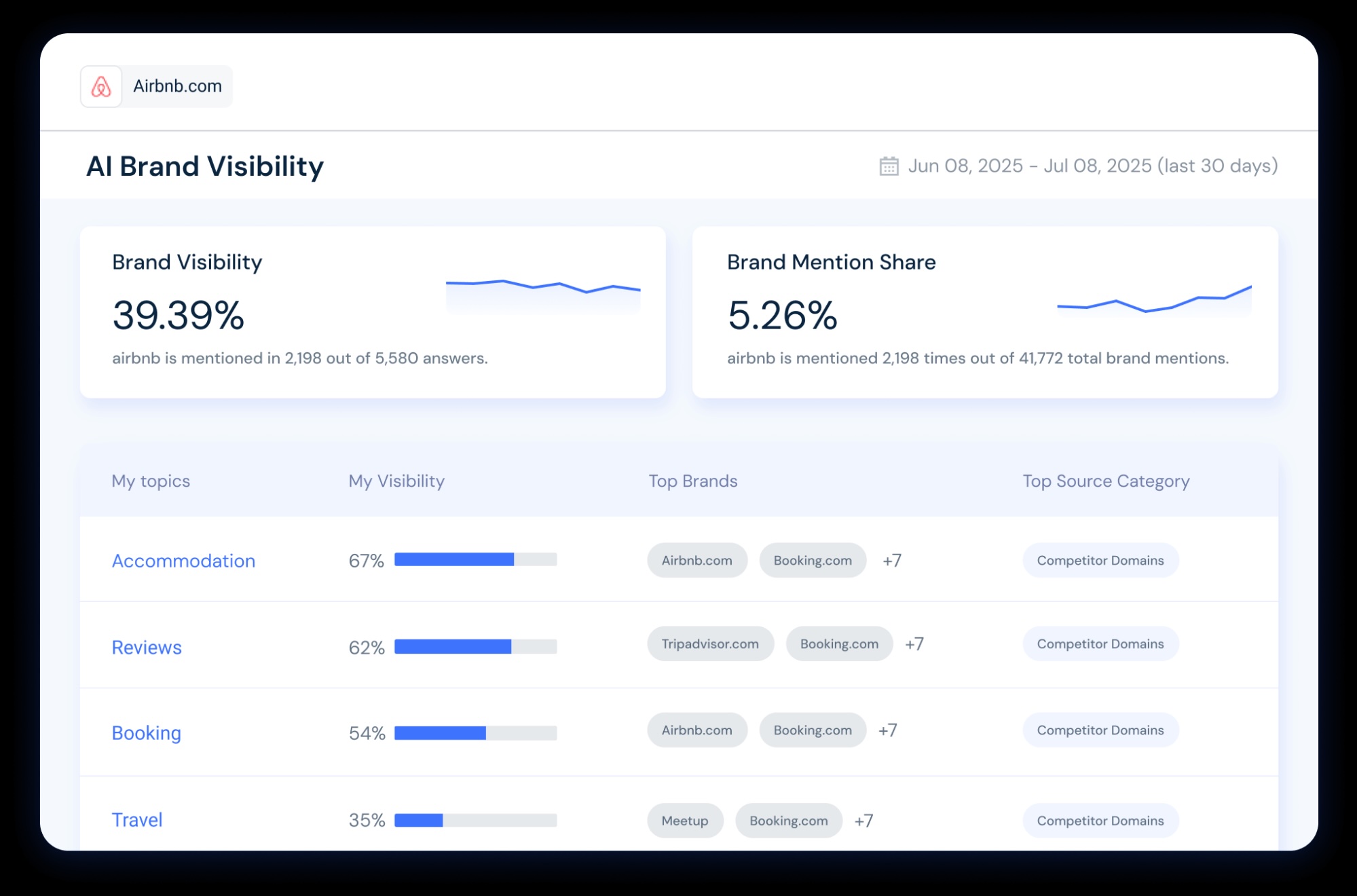
Similarweb is known for digital market intelligence. Its AI-related reporting is most useful when you want to connect AI discovery to broader traffic patterns and competitive research, especially if you’re already operating with a “channel portfolio” view of growth.
Pros
- Strong competitive and market context
- Useful for tying AI discovery to broader traffic strategy
- Great for exec-level visibility and benchmarking narratives
Cons
- Often sales-led pricing
- May not be as prompt-tracking-native as specialist tools
Pricing: Typically via sales conversation (varies by package).
Best If You Already Use It: Semrush AI Visibility Toolkit
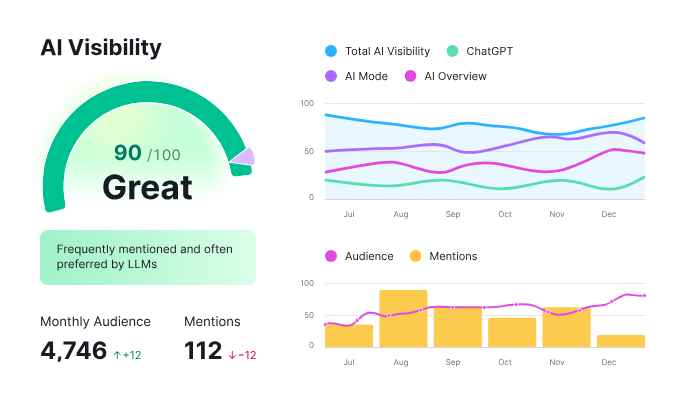
Semrush AI Visibility Toolkit is compelling if you’re already living in Semrush for SEO. It extends your workflow into AI visibility: prompts, competitor positioning, sentiment-style brand performance, and site audit signals for AI accessibility.
Pros
- Fits naturally into an existing Semrush stack
- Includes prompt tracking and AI-search-focused site audit checks
- Solid “bridge” tool for teams moving from SEO to GEO
Cons
- Seat-based pricing can increase costs for teams
- Some limits require add-ons
Semrush AI Visibility Toolkit pricing (public): $99/month for the toolkit, with defined limits for prompts, reports, and site audit checks.
Best For Benchmarking And Share Of Voice: Ahrefs Brand Radar
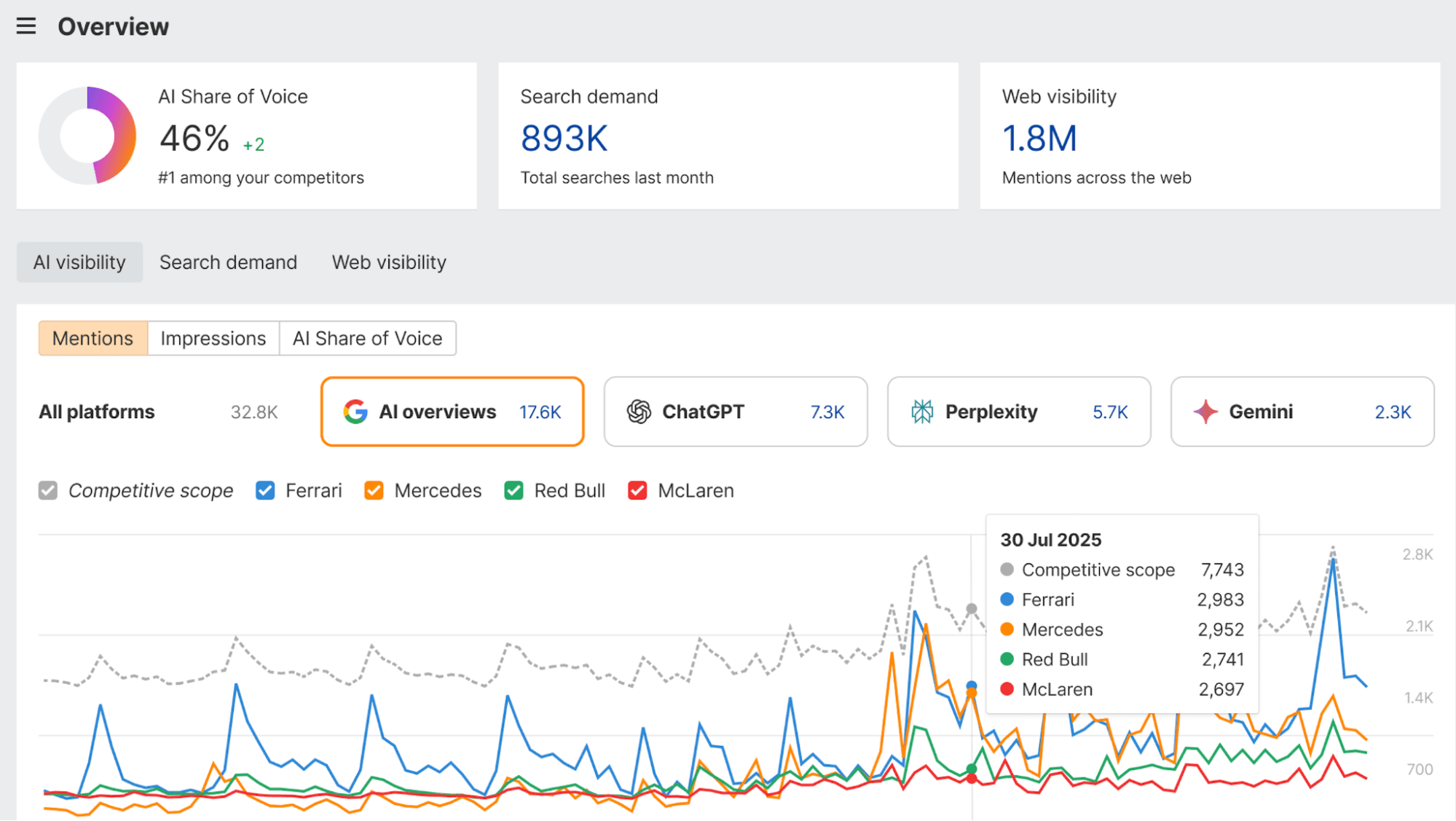
Ahrefs Brand Radar is built for visibility comparisons, especially “how often are we mentioned vs competitors?” It also positions itself around discovering what drives AI answers, including sources and prompt/topic clustering.
Pros
- Strong benchmarking posture (share of voice focus)
- Quick to access and explore (minimal setup)
- Clear public pricing for AI indexes
Cons
- Can be pricey if you need multiple indexes or all platforms
- May require pairing with other tools for deep workflow automation
Ahrefs Brand Radar pricing (public): $199/month per index or $699/month for all AI platforms; custom prompts add-ons start from $50/month.
Best For Content Teams: Clearscope
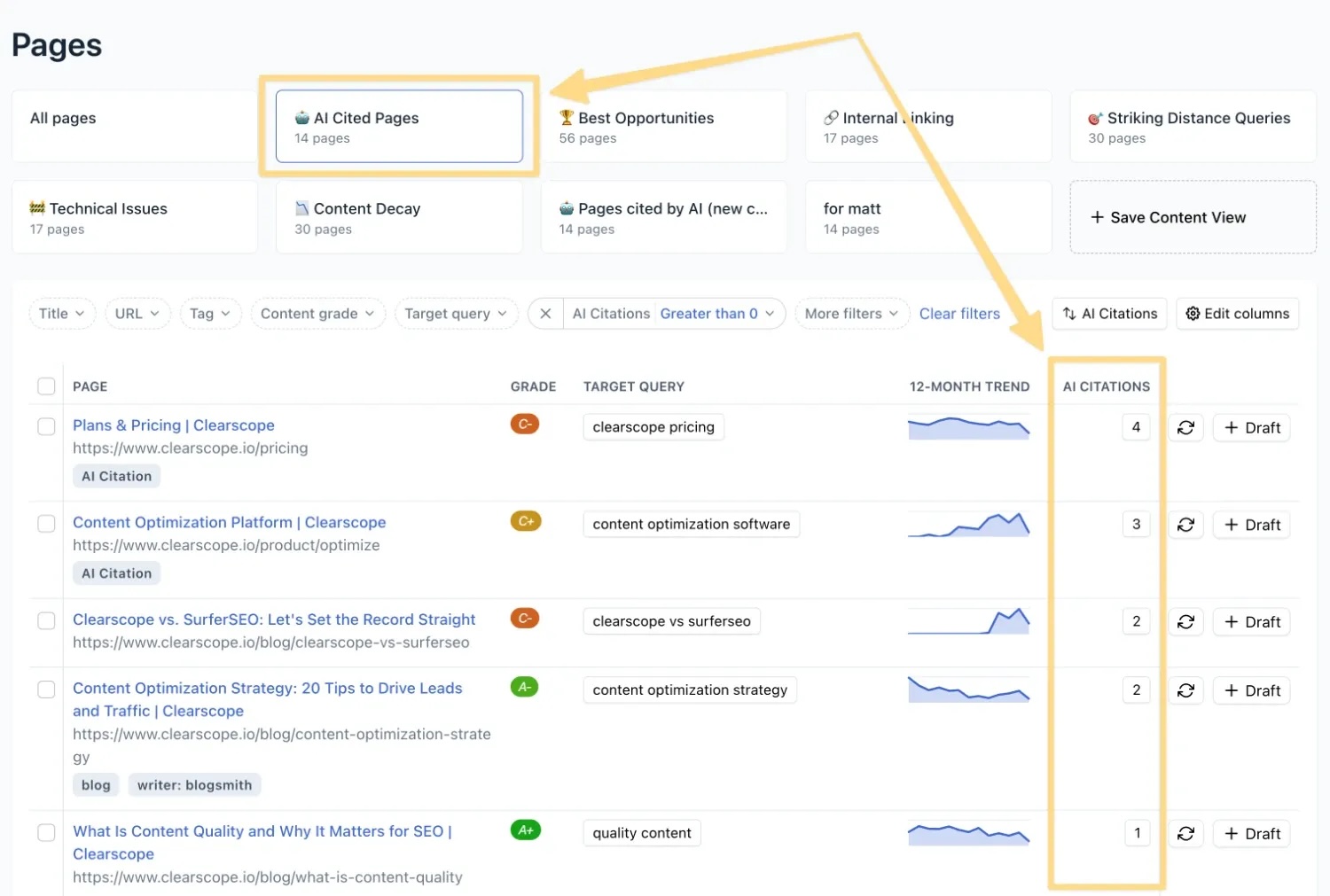
Clearscope is historically a content optimization platform, and its AI visibility positioning is a natural extension: helping writers and editors build content that both ranks and gets used as a “source of truth” inside AI answers.
Pros
- Excellent fit for editorial workflows
- Strong for content planning, drafting, and optimization
- Clear pricing and included allowances
Cons
- May not replace a dedicated multi-engine monitoring suite for large enterprises
- Best value shows up when you have consistent publishing velocity
Clearscope pricing (public): Essentials is $129/month, with higher tiers for bigger teams and more inventory.
Bottom Line
If you want one rule of thumb, here it is:
- Enterprise with high stakes: start with Profound (or pair an enterprise suite with a content tool).
- Need multi-engine monitoring + actionable audits: look hard at Scrunch.
- Want the lowest-friction starting point: Otterly.AI is a practical entry.
- Agency / client reporting: Peec AI keeps visibility reporting clean and presentable.
- Technical + diagnostic depth: ZipTie is built for “show me why.”
- Already invested in SEO suites: choose Semrush or Ahrefs based on which ecosystem you trust.
- Content-led growth: Clearscope helps writers win the new “citation economy.”
In 2026, AI visibility isn’t a vanity metric, it’s distribution. The brands that measure it early usually get to shape it.
FAQs
1) What should I track first for AI visibility?
Start with a focused prompt set: 20–50 prompts that map to your money pages and your highest-intent buyer questions. Track: (1) mentions, (2) citations, (3) competitor inclusions, and (4) sentiment/positioning.
2) How do I improve AI visibility without “gaming” anything?
Make your best pages easier for models to trust: clear definitions, direct answers near the top, structured FAQs, credible citations, updated stats, and author/about pages that reinforce expertise. Then publish supporting content that answers adjacent questions (topic clusters).
3) Do I need more than one tool?
Sometimes, yes. Many teams pair a monitoring tool (visibility + prompts) with a content tool (planning + optimization). If you’re early-stage, start with one tool until you learn which metrics actually move for your market.
4) Is GEO replacing SEO?
Not replacing, mutating. SEO still matters because AI systems pull from the web, citations, and brand signals. GEO is the layer that helps you win when the “result” is an answer instead of a click.