
A top White House tech official has accused Chinese startup Moonshot AI of stealing from Anthropic’s most powerful model, Fable, to build its new Kimi K3 system, and of obtaining restricted Nvidia chips abroad. The adviser offered no public evidence, and Moonshot hasn’t responded. Treasury is now weighing sanctions, sharply escalating US-China AI tensions.
Key Takeaways
- A Trump tech adviser accused Moonshot AI of distilling Anthropic’s Fable
- The alleged goal was building Moonshot’s new Kimi K3 model
- The official also claims Moonshot got restricted Nvidia chips abroad
- No public evidence was presented for the distillation claim
- Treasury says sanctions and a trade blacklist are on the table
What the White House Alleged
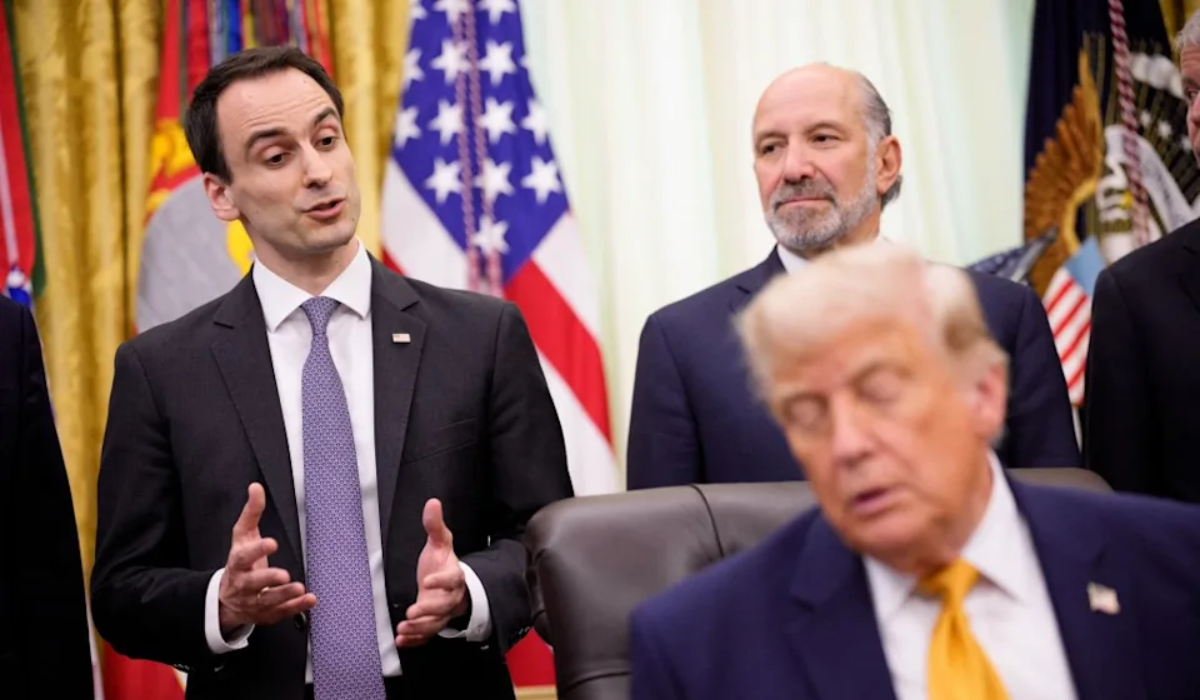
The accusation came from a senior official. Michael Kratsios, the White House science and technology adviser, alleged Wednesday that Moonshot AI distilled Anthropic’s Fable for the development of its K3 model, posting the claim on X.
His language was pointed. Kratsios called it large-scale, covert industrial distillation aimed at stealing proprietary US technology and undermining American research, and described that behavior as unacceptable.
Distillation is the technique at the center of it. It uses the outputs of a more capable model to train or improve another system, essentially having a weaker model learn by extracting answers from a stronger one, a way to build a competitive model far more cheaply.
There’s a second charge, too. Kratsios also alleged Moonshot gained access to restricted cutting-edge Nvidia servers to train its models, reportedly using Nvidia GB300 servers in Thailand that are blocked for sale to China under US export rules.
The Model at the Center
The trigger was a major release. Moonshot’s Kimi K3 gained worldwide attention after its unveiling last week, with many observers believing it narrowed the gap between Western and Chinese AI models, and Moonshot says it can rival top US technology.
Its scale is striking. Kimi K3 is a 2.8 trillion-parameter model, described in reporting as the largest open-weight model ever released, and Moonshot plans to release it as open source on July 27, letting anyone download and customize it.
That openness raises the stakes. Once a model of this scale is open-sourced, concerns grow that any copied capabilities could spread beyond anyone’s control, which is part of why Washington is reacting so forcefully to the timing.
The Evidence Gap
A crucial caveat runs through the story. Kratsios did not present evidence that outputs from Fable had been incorporated into Kimi K3, and the claim rests on the government saying it has information rather than on published proof.
Researchers are divided. The timing of the two models’ releases prompted disagreement among AI researchers about whether Moonshot could realistically have used the US model to train its latest system in the window available.
Key parties stayed silent. The BBC and others said they had contacted Moonshot, the Chinese embassy in Washington, Anthropic, the White House, and Nvidia, and Moonshot and the Chinese embassy did not immediately respond to requests for comment.
The Threat of Sanctions
The accusation came with teeth. Treasury Secretary Scott Bessent said in a separate post that he was considering adding Moonshot AI to a trade blacklist and imposing sanctions.
He drew a clear line. Bessent said sanctions would be on the table when Chinese companies cross into intellectual property theft through what he called industrial-scale distillation attacks, signaling the administration may move from rhetoric to concrete penalties.
The backdrop is a broader campaign. The White House said in April it would work more closely with US AI companies to combat industrial-scale campaigns by foreign rivals to steal technology, and the State Department reportedly ordered a global diplomatic push to spotlight such efforts.
A Pattern of Distillation Claims
This isn’t the first such allegation. In June, Anthropic accused Chinese e-commerce and tech giant Alibaba of illicitly extracting the capabilities of its Claude models using distillation, and urged Congress to penalize the companies involved.
The accusations go back further. In February, Anthropic said three Chinese AI companies, DeepSeek, Moonshot, and MiniMax, created more than 16 million interactions with Claude using roughly 24,000 fake accounts, in violation of its terms of service and access restrictions.
OpenAI has raised similar alarms. The company warned lawmakers that DeepSeek was targeting it and other leading US labs to replicate models for its own training, showing the concern spans multiple American AI firms.
Why It Matters
The dispute lands at a delicate moment. The escalating scrutiny comes as Trump is expected to meet Chinese President Xi Jinping in September, and new sanctions could ramp up tensions over technology just as the two sides prepare to talk.
The stakes go beyond one company. US officials frame the spread of distilled Chinese models as a national security risk, given AI’s economic weight and potential military uses, while the absence of public evidence leaves room for debate over how much is provable versus political.
For now, it’s a serious accusation without disclosed proof, met with silence from the accused. How Washington follows through, with sanctions, a blacklist, or tighter export controls, will show whether this marks a genuine turning point in the AI cold war or another salvo in an intensifying rhetorical battle. This is a politically contested topic, and readers should weigh the government’s claims against the evidence made public, which so far is limited.
Digital Trendings is your trusted source for AI news and updates, stay tuned for more.