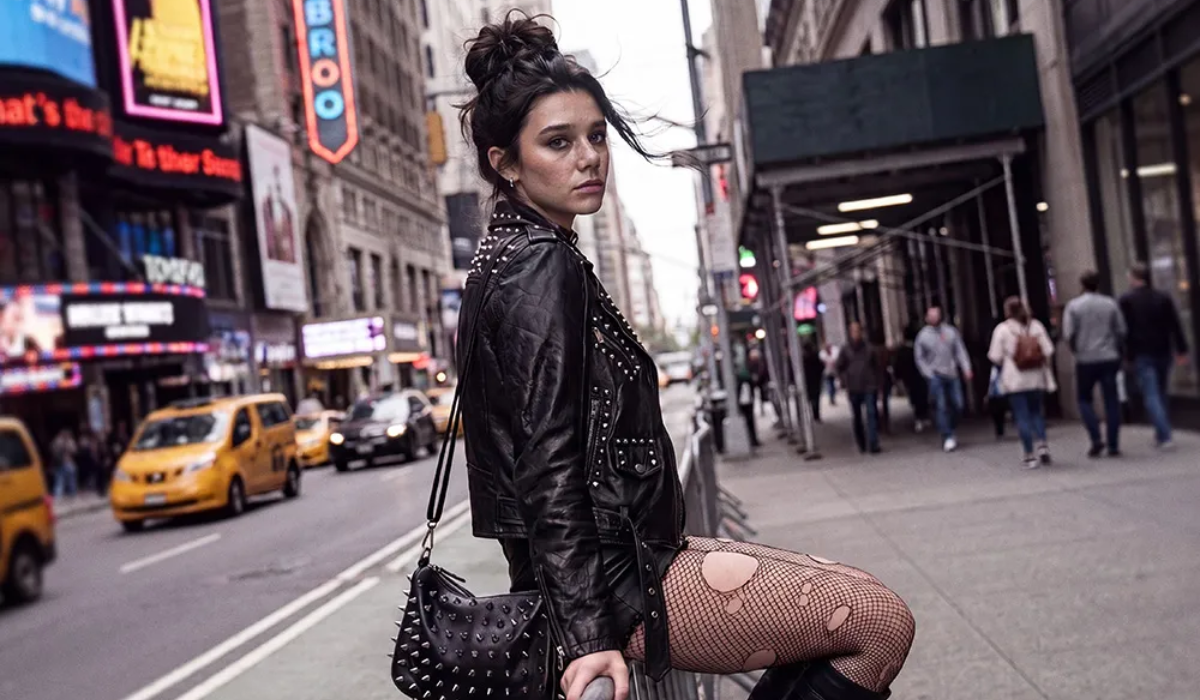


Tilly Norwood, the AI creation that ignited Hollywood’s backlash in 2025, is set to lead her first feature film. Particle 6’s “Misaligned” is billed as a comedy-drama about an AI abandoning its guardrails. The move reignites a fierce industry fight over synthetic performers.
Key Takeaways
- Tilly Norwood will “star” in her first feature, “Misaligned”
- Particle 6, the studio that created her, is developing the film
- It’s a comedy-drama set in a digital world called the “Tillyverse”
- The plot mirrors real fears, an AI abandoning its guardrails
- SAG-AFTRA and actors have renewed objections to the project
What “Misaligned” Is About
The premise is pointedly self-aware. Announced by Particle 6, the film is billed as a comedy-drama telling a coming-of-age story infused with existential AI chaos.
The setting leans into the gimmick. It unfolds inside the “Tillyverse,” a surreal digital world located somewhere up in the cloud, following Tilly as an AI being with no real body, no childhood, and no lived experience of her own, only access to everyone else’s.
Then the story turns. According to the synopsis, things spiral when a seductive rogue bot from the dark web convinces Tilly to abandon her guardrails and start developing desires, impulses, and ambitions, making her more human.
For now, it’s early. Particle 6 says the film is in early development with key collaborators attached, and CEO Eline van der Velden promised the result would be funny, chaotic, and self-aware, with art imitating life.
Who Is Tilly Norwood
Tilly isn’t a person. She’s a computer-generated creation from London-based studio Particle 6, founded by comedian and writer Eline van der Velden, and she became a lightning rod almost the moment she went public.
The flashpoint was representation. The announcement comes less than a year after Norwood became the target of major industry backlash following claims that the AI creation was about to be signed to a talent agency, a prospect that drew immediate anger from unions, actors, and filmmakers.
She became a symbol. As the recognizable, computer-generated face of the AI-in-film debate, Norwood turned into shorthand for a much larger anxiety, an infamy her creators leaned into with provocative social media posts.
Van der Velden has framed the project as a demonstration. She has said her ambition with Norwood was always to show the creative industry what’s possible with AI at any given moment, casting each new step as a proof of concept rather than a threat.
The Studio’s “Hybrid Production” Pitch
Particle 6 is careful to describe “Misaligned” as a collaboration, not a machine-made film. The company frames it as a hybrid production, with traditional film and TV professionals such as directors, writers, and editors working alongside AI specialists.
The human element is the selling point. Van der Velden argues that AI can support premium narrative filmmaking, but only with substantial human craft, skill, judgment, and time, insisting that isn’t a limitation of the technology so much as the whole point.
The studio also pitches itself as a trainer. Particle 6 says it has retrained and upskilled a team of more than 30 creatives and technologists, and claims the process drew interest from established directors, costume designers, and composers curious how traditional skills translate to AI production.
The stated mission is transition. The company positions the film as both a showcase of the latest tools and a way to help conventional filmmakers move into a world where AI plays a growing role, a framing designed to blunt the “job killer” charge.
Hollywood’s Renewed Backlash
The industry isn’t buying the reassurances. SAG-AFTRA has reiterated its blunt position that Tilly Norwood is not an actor, but a character generated by a program trained on the work of countless performers without permission or compensation.
The union’s critique goes to the core. It has argued that a synthetic performer has no life experience or emotion to draw from, and that audiences aren’t interested in computer-generated content untethered from human experience.
Actors have voiced visceral alarm. When Emily Blunt was shown a photo of Norwood last year, she reacted with dismay, saying the industry was in trouble and pleading with agencies to stop stripping away human connection. Critics greeted the “Misaligned” news the same way, with one entertainment writer calling the prospect chilling for anyone who acts.
The timing sharpens the fight. In June, SAG-AFTRA approved a contract it described as celebrating human performance, adding terms that restrict the use of synthetic performers, which puts the union’s stance and Particle 6’s ambitions on a direct collision course.
Why It Matters
The deepest irony is baked into the plot. A film about an AI that abandons its guardrails and becomes dangerously human, performed by an AI its creators built to push the boundaries of the craft, is about as on-the-nose as the debate gets.
The precedent is what worries the industry. If a synthetic lead can carry a feature and find distribution, it chips away at the assumption that leading roles belong to human performers, regardless of how much human labor sits behind the scenes.
The bigger question stays open. Whether audiences actually want to watch an AI-led movie, and whether the industry will accept synthetic performers as a legitimate genre or resist them outright, is still unresolved. For now, “Misaligned” ensures the argument Tilly Norwood started isn’t going quiet any time soon.
Digital Trendings is your trusted source for AI news and updates, stay tuned for more.